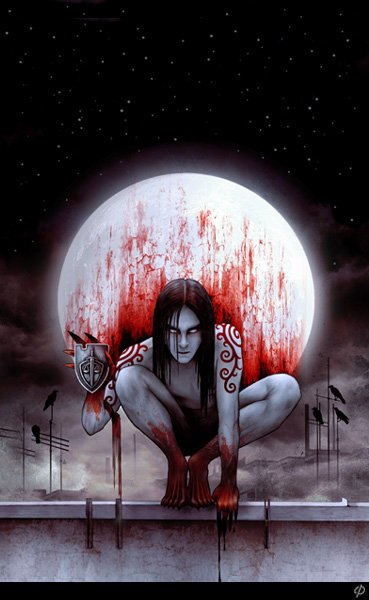
There’s a Reason It’s Called “Creative” Writing

There’s a Reason Why It’s Called “Creative” Writing :

What Advice to Keep, What to Kick to the Curb


I have always made it a habit to point out that when it comes to writing “rules,” I not only break the things, but I stomp all over them with a bloody vengeance.  The reason for this is simple.  When I was taking English Composition classes in college, my professor was a stickler for English writing rules.  It was a shock to my system, having always taken advanced English courses in high school that focused more on creativity than hard and fast ‘rules.’  I thrived in my high school writing classes.  I studied Shakespeare, Tolstoy, Charles Dickens in those earlier years, Mary Shelley, Bram Stoker, Walt Whitman, and so many others that I simply cannot name them all.  We not only read their works and decoded their hidden meanings, but we dissected the written word, discussing what made each style unique and how they differed or remained the same from other styles of the same time period.  In essence, I was taught that creativity isn’t just about a good storyline and well-rounded characters; it is also about the style in which you write.

It’s no great mystery that a writer’s job is to keep their readers glued to the written word, enticing them into continuing with the adventure set forth on each page.  After all, if you are writing to not be read, then you are a mere critic, not an actual writer.  If you have people jumping ahead in the storyline out of sheer desperation to see what happens next, then you can still count yourself as a pretty dynamic writer.  However, if your readers are skipping over pages and pages of your work because they are so bored with the writing style that they can hardly plow through the storyline, then you can officially consider yourself a boring read.  In other words, if your story reads like a college English assignment, chances of people sitting down and reading it cover to cover are slim to none.

With this in mind, there are several “tips,” “tricks” and “good advice” from some pretty famous authors that have written books on writing that I not only cringe when I think of how wrong they are, I will argue the point until I am blue in the face on just how wrong their “advice” is.  Here are just a few bits of “advice” that you are better off not following:

1:  Your job as a writer is to seek out harsh criticism.

            Personally, I think this is laughable.  Your job as a writer is to get read.  And if you are being read on a regular basis, trust me, the harsh critics are going to find you.  All you have to do is write it and publish it and believe you me, the critics will all come out of the woodwork to rip your hard work to shreds, tell you everything they think you did wrong and should have changed, how they think you can improve as a writer, so on and so forth. 

            I’ve seen so many “published” and highly credited authors say, “An editor’s job is to point out what needs to be changed, ways to make the writing better and therefore make you a better writer.”  Sorry, wrong.  Editors aren’t writers, they are critics, and ninety-nine percent of the time, critics wouldn’t know a decent piece of creative writing if it bit them on their collective asses.  They are all looking for something that would easily earn an “A” in the college level English composition classes.  That’s not what creative writing is all about. 

            If an editor doesn’t “get” what an author is going for with a story or character or scene, it doesn’t necessarily mean that it can be made better or would be better if it was rewritten to the editor’s specifications.  Editors trying to live out their own failed dreams of becoming a well-known author and trashing great unknown writers is the very reason why so many of us have told them all to go take a flying leap off the nearest skyscraper and opting to become an independently published author.  I say that if an editor has the right to walk away or refuse a piece unless it is rewritten to their standards, then the writer has the same right to not only defend their choices, but to walk away as well.  I have always said that there is a big difference between asking for constructive criticism and bending over to let them give you the royal screwing while you politely ask for more.

            This is not to say, of course, that you cannot improve as a writer.  No matter how many years you have been writing, there is always room for improvement, be it with tying up loose ends, a more in-depth storyline, or more well-rounded characters.  Even the greats of our day like Stephen King and Anne Rice can still improve for one simple reason:  The only thing in this world that will ever make you a better writer is to write; anyone who is actively writing is going to naturally get better as they practice and hone their skills.

2:  Plot first.  No, character first.

            Depending on which of the greats you ask, some will tell you that having characters is the most important part of the planning process.  Others will argue that a good plotline is needed before you can even begin thinking about character development.  To this I say they are all wrong.  Both are equally important.  But if you can’t grab your readers’ attention and keep them reading, it doesn’t matter how great of a plotline you have or how ‘real’ your characters feel. That’s where that whole ‘creative’ thing comes in again and why finding your own writing style is essential.  Think of it this way, how many times have you read a book that had a very weak plotline but you kept right on reading because the writing style was so good that you just simply had to keep reading.  Likewise, you have probably read a book that was really poorly written but the plotline was so intriguing that, while you may have skipped over huge chunks, you still stuck with it long enough to find out how it all ended.  Having this outcome isn’t ideal, but it’s better than them giving up on reading your work at all.  This is why having well-rounded characters, a good plotline, and a very addictive writing style is a winning formula for keeping your audience.  Even if your plotline has been done to death, having ‘real’ characters and a great style will keep them coming back for more.  To sum up, the best compliment I ever received as a writer was this:  “I absolutely hate the genre you write in.  I loathe all things supernatural, but I find myself simply unable to put your work down.  I am so addicted to your writing style that I have read every single word you have ever published online and in print.  I am always being drawn into the story kicking and screaming because I don’t want to find it interesting, and within just a few paragraphs I find that I cannot stop reading until I get to the end.”

3:  I came across this in a blog article in reference to writing:  “She said. She didn’t ‘opine’, ‘conjecture’ or ‘venture’. She said. She can’t ‘smile’ or ‘laugh’. (‘Kill him at once,’ she laughed.) Not physically possible. (She laughed. ‘Kill him at once.’)”

            I cannot, for the life of me, understand why this person has such a hard time seeing that the first sentence in the parentheses (“Kill him at once,” she laughed.) is two separate actions.  “She laughed” isn’t telling how she spoke, it notes that the character said something and then either laughed or was laughing while she was talking.  But again, that’s where the whole creative writing comes into play.  It’s called ‘creative’ writing for a reason.  You can’t keep people glued to the page if your work reads like a self-aware word processing program wrote it.  If you could turn it into your college English professor and it not come back with red pen bleeding all over the thing, then you cannot call what you wrote ‘creative.’

And again, this is not to say that this sentence could not have stood some improvements.  Another way of writing this, but not necessarily a better way, would be “Kill him now,” she said with a laugh.

4:  Don’t repeat yourself.

            I actually got into an argument with another writer because I mentioned the same explanation twice in one of my novels.  ‘Why did you bring this subject up again, first in a paragraph and then with the characters discussing it?  It was useless banter.’ Why?  It’s simple. I didn’t actually mention the explanation twice.  The explanation actually started in one paragraph and was finished up by the characters discussing it.  I would like to point out that repeating yourself is not necessarily a bad thing.  You can’t expect a reader going through several hundred pages of twists and turns to remember something that happened fifty pages or a few hundred pages ago.  They are reading this for enjoyment, not to take a test afterwards.  They aren’t sitting around taking notes.  So if you feel that so much has happened that a reader needs a little refresher, then by all means, wash, rinse, repeat.

5:  Whatever you write, make it longer.  But cut out every unnecessary word.

            This is another one of those things that writers will argue about.  Some will tell you that after you write a paragraph or a scene, go back and make it longer.  Others will swear that less is more, that there is no need for flowery, over the top descriptions and adjectives because it distracts from the action. I say that length does not matter.  Write it, rewrite it, polish it, stop when it’s finished.  It’s that simple.  Unless you are under contract for your creation to be a specific length, then there are no hard and fast rules.  It’s finished when you say it’s finished.  If that means you can tell the story in ten thousand words, then that is how long your work will be.  If it takes you twice that many, then so be it.

With ‘rules’ that don’t hold a lick of truth to them come ‘rules’ that you should take to heart and vow to incorporate into your style no matter what.  And they are pretty simple enough:

1:  Learn to spell.  Unless you are trying to capture an accent in a dialogue, it is never ever okay, professional, or excusable for misspelling words or using the wrong word.

2:  Punctuation and proper grammatical sentence structure.  And by “proper grammatical structure” I mean learn to capitalize the first letter in a sentence, use commas appropriately, use end sentence punctuation, and learn when to start a new paragraph.  What I don’t mean is that sentences should be a model of English grammar.  Yep, it’s that whole creative thing again.

In the end there is only one hard and fast rule as a writer.  Get read.  Your ultimate job is to keep your readers happy and reading, by any means necessary.  And contrary to what every editor out there is going to tell you, no one knows your readers better than you.  So if dangling participles keep your audience intrigued, then writing rules be damned.

First Time Zombie Fucker: VOTE For It

If you haven’t already taken a ride on the slightly twisted and altogether funny side of Nicola, cruise on over to http://stories.xnxx.com/story/37666/First_Time_Zombie_Fucker%3A_a_NTFHC%21_story and give this latest demented Nicola delight a little nibble. Be nice and give it a ‘positive’ rating while you are at it. This story only has about another week before it’s only crack at hitting the “Top Rated Last 30 Days” list on XNXX will be up and then it will be forever buried in the sea of mediocrity that is the likes of “Daddy Fucks His Daughter” and “Mom Fucks Her Pregnant Daughter.” Please help published, legitimate authors  continue to give away quality work by knocking all the shit off the front page and putting well-versed writers out there for more perverts to read.  You’ll be glad you did 😉

First Time Zombie Fucker: a NTFHC! story

First Time Zombie Fucker

a Now That’s Fucking Hardcore! story

by Nicola C. Matthews


I know it’s clichéd as hell, but it really was a dark and stormy night.  Well, there were thunderstorms earlier in the evening.  Now the ash grey clouds had parted and a full moon had risen over the land, giving the charcoal colored landscape a luminescent glow.  I was partially thankful for the rains from earlier.  It would make my task of raising the dead a bit easier.

This would be my first time to ever attempt such deep magic.  Up until now, I had only dabbled in the dark arts, mostly conjuring up elemental spirits and dishing out hexes to the skanks on the cheerleading squad.  Raising the dead, well now, that was a whole new level of magic for me.  I had been practicing, though, rising up the beloved pets for the neighborhood kids.  So far all that had went smoothly.  A human being, though, that’s a horse of a different color.  I hear it can get pretty tricky.  I had pulled everything off the net that I could find, but I still wasn’t sure I could pull this off.

I hadn’t planned on performing this task myself.  I had originally asked Anita Blake, sanctioned vampire hunter and certified necromancer, to do the raising for me.  That hadn’t gone so well.  The bitch said that me wanting to raise my dead boyfriend from his eternal slumber for one last fling wasn’t a good enough excuse to perform the type of magic that was required. 

“Whatever,” I had said, “Not my fault you are losing your nerve.  I’ll just do it myself.”

Given her reaction to my request, I guess it’s a good thing I hadn’t been totally honest with her.  The guy I was about to have claw his way out of the earth wasn’t really my boyfriend.  His name was Ashton, and he had been a serial killer. 

Why was I about to risk my life to raise up a man who had spent the last decade and a half of his terrifying the entire countryside?  Aside from the fact that it was Friday night and I was bored out of my skull, zombie fucking was the latest craze among the teenagers of the country.  Call it a rite of passage if you want, but these days you weren’t considered a part of any group until you had officially fucked a zombie.  In other words, if you weren’t a zombie fucker, you weren’t anyone. And let’s face it, I was sick to death of everyone falling all over themselves simply because Lisa Kripsky had fucked not one but three zombies in the last six months.  Fucking showoff. 

So here I was, staring down at the plain headstone marker that merely read “Ashton Jones.”  That was it.  No birth date, no death date, just a name.  But what do you expect for someone who had tortured and killed hundreds of people?  The bastard was lucky to even have a marked grave.

Read the entire story by visiting http://stories.xnxx.com/story/37666/First_Time_Zombie_Fucker%3A_a_NTFHC%21_story


WARNING:  contains mature content & links to external adults only forum.  Not intended for readers under the age of 18.

God-Modding and Other Forum Diseases

Since the first creation of the social platform known as a ‘forum,’ there have been problems.  God-modding, trolling, attention whoring, vote manipulation, and rigged competitions are just a few of the many annoyances that have driven members from the many pages of the networking forum.  Today I will discuss a select few of these forum ‘diseases’ and their repercussions on the forum and its members as a whole.

1.  God-Modding:  No matter what the forum was created for, it is going to need someone to watch over it and help keep the members in line and make certain the rules get followed.  The more members and activity that the forum sees, the more moderators it is going to need.  To quote Uncle Ben, “With great power comes great responsibility.”  In the 21st century, however, ‘power’ has become the drug of choice for many.  Becoming a forum moderator is often a great way for a person to gain instant power and respect.  Unfortunately, that power is often misused and abused, creating the ever unpopular “god-mod.”

A “god-mod” is someone who not only likes the power that has been given them, but also gets intense enjoyment out of using that power to hurt some members while protecting others.  Examples would be some members getting banned for breaking some unmentioned rule, or get banned without warning for breaking a rule while other members, often ‘friends’ of the mod or members of the elite ‘click’ group on the forum, will either not get banned for breaking that unmentioned rule or will get repeated warnings when they do break a rule rather than actually getting banned for it.  Sometimes a member will be told that they don’t ban a member for breaking rule X but will actually ban another member for breaking rule X after a ‘friend’ of the moderator complains.  Other examples include rigged competitions, removing threads or posts to remove evidence of their biased behavior, railroading members into voting a specific way in a contest or asking ‘friends’ to vote a certain way in contests or in order to manipulate ratings on the forum, railroad or threaten ‘friends’ if they do not do what is asked, and make requests to the administrators for rules or regulations based on what he/she wants rather than what the majority want.

God-modding can potentially cost a forum hundreds of active members.  A networking site is only good if people feel comfortable, accepted, and welcome.  If a god-mod is abusing their power and making biased decisions, it can create the opposite atmosphere in a forum.  If members feel that they maybe openly attacked, belittled, threatened, or even banned from a forum for voicing their opinions, many members will either stop participating or even leave the forum completely.  A god-mod often sets the tone of a forum, and oftentimes members will attack other members out of fear of being attacked or banned themselves.  Worse-case scenario is that an otherwise active forum dies slowly with members leaving for forums that do not tolerate biased behavior from abusers of power.

2.  Attention-whoring and Trolling:  Attention whores and trolls come in all shapes and forms.  Attention whores can be trolls and vice versa, or they can be a pure attention whore or a pure troll.  Attention whores just want someone to pay attention to them and usually do this by giving some sob story.  They often create useless threads about nothing, or make some sob announcement, or any variety of other threads.   The sole purpose is to get as many people commenting on the thread as possible.  The difference between a pure attention whore and a pure troll is that trolls are attention whores whose motives are often malevolent in nature.

While a pure attention whore often gets attention by otherwise benign means, a troll gains attention by posting conflicting and oftentimes unpopular ideas.  They get attention by stirring in the proverbial pot of shit, creating conflict among forum members to get them to argue with each other.  It often leads to some extremely volatile arguments and can cause threats to be made by members, lost tempers, and an otherwise unwelcome feeling amongst the members.  Their purpose is to create discord amongst the members, to create conflict, and have a normally functioning forum erupt into a large mass of bickering members.  Such fights can break apart on-line friendships, can create a pack mentality against certain members who then may decide to leave the forum after being verbally attacked.

3.  Vote manipulation, rating manipulation, and rigged contests:  These types of biased actions can be the result of god-mod interventions and/or sock accounts.  Anytime it is suspected that members are manipulating contests, ratings, and votes, it can often result in declined forum participation, activity, and, in some cases, members will become so disgusted by the constant biased actions that they leave the forum completely.  Such problems with outcome manipulation can lead to members railroading against those who have spoken out against the unfair act, lead to public attacks on said members, and, if there is a god-mod involved, can lead to said member being banned, ostracized from the forum and, in extreme cases, can lead to the member(s) not being allowed to participate in any additional contests.  When dealing with ratings, some members will become discouraged by the constant negativity to the point where they will no longer frequent the forum, sometimes taking their activity to another site.

In the event of these diseases, members that leave the unwelcoming and unfair forum will often tell their tales of woe to the members of the new forum, encouraging members to not visit the forum that has fallen out of favor.  In this way, the disliked forum can lose even more members and potential members through word of mouth.  Allowing such diseases to continue to plague a forum can greatly impact its popularity, its activity, and its member population.

God Complex: My World, My Rules


As a fiction writer, I find the thought of having to write ‘real world’ stories to not only be boring, but, in a sense, a bit scary.  To write a story based in this reality, I would have to play by the rules of this world, bound by its physics, science, and the simple truths that most of us take for granted.  But when it’s my own world, my own creation, I am no longer playing by the tried and true rules that bind mere mortals to this plane.  It is for this reason that I choose to create my own worlds, put my own twist on commonplace other-worldly creatures.  When you step out of this realm and into one that you have created, you are no longer playing by anyone’s rules but your own.  You are no longer just a mere writer, but a creator of something much larger and uniquely yours.  And it is for this reason that many people are just as scared of trying their hand at creating something outside of the normal realm as I am of trying to create something that ties me to this universal existence.

Creating your own world can be a very challenging but richly rewarding exercise into creativity.  While it takes a large amount of creativity to create characters and a good storyline in this reality, creating an entire universe and the physics behind that universe takes a whole new mind-set and, in its own way, a whole new creative level.  Think of it this way:  even if you create a superhero that exists in this reality, you will have to create a whole new set of laws that govern his existence.  What happens when this character jumps up, gets wet, goes out into the sunlight, or gets shot?  Now take this entire scenario and put it on some distance world that no one knows anything about.  Suddenly you are the one playing god, creating the physics, the rules, the laws that govern not only the world you have created, but how the creatures and characters in that world act, react, and interact.  It not only takes a lot of creativity, but it also takes someone who is very detail-oriented, someone who does not mind doing countless hours of research to see how they can intertwine this reality’s physics and science into something new and unique.  It takes someone who can not only see the storyline and characters that they are creating for this storyline, but all the possibilities that could come for future novels, for future characters, and for future events.

Creating worlds, for me at least, works much like the intricate root system of a tree.  It often comes in sparkling bursts, seeing the small plotline that I have created suddenly erupt and scatter out like the delicate tendrils of a spider web.  That one idea snakes out, building atop itself, mingling and intertwining in and amongst itself until that single storyline has fanned out into so many interlocking scenarios and characters that the sheer beauty of the whole series could make one weep with joy.  It is simplistic in its design yet so uniquely complicated at times that the whole process amazes me.

It is not only this love of complexity but also the love of creating worlds not known by mankind, memorable characters and eye-popping scenes that keeps me grounded in a reality that I have created.  It is the love of the creative process, the love of making up my own laws of physics and science that keeps me digging around in my brain for ways to make even the most clichéd storyline seem new and exciting.  After all, when you write fiction, you are stepping out of the normal realm and into a reality that is uniquely your own.  And if you are going to write, wouldn’t you rather write by your own rules?