You Don’t Know Me

don't assume


It took me about a nanosecond to realize you aren’t really allowed to have a public opinion when you are in the limelight. Let’s face it, when you air an opinion of any kind, you are bound to piss someone off. When you are famous, semi-famous, pseudofamous, or even infamous, voicing said opinion can cost you a LOT of supporters and fans. It’s just safer to not have a public opinion, even when you are posting under your own private account surrounded by family and friends. Don’t get me wrong, one of the things I love about the World Wide Web is the ability to slip into anonymity. Well, sort of.

I think it’s time everyone stopped long enough to ask themselves who’s really behind that screen name? I find it incredibly ridiculous that so many people are so quick to jump on someone when they really don’t know who it is they are speaking to. Just because I don’t announce to the world that I am a bestselling author or slap it on the covers of my books doesn’t mean it isn’t true. Just because I don’t brag about all the times I’ve had conversations with NYT bestselling authors and all the times they have linked to this blog doesn’t mean it hasn’t happened. Just because I don’t brag about being friends with bona fide rock stars or getting put on the guest lists to their concerts doesn’t mean it isn’t true. Just because I don’t brag about all the conversations I’ve had with other bands and the off-the-record interviews I’ve done with them doesn’t mean it never happened. I don’t feel it is anyone’s business who I am friends with or what those friends do for me, and I do not feel the need to air every single aspect of my professional and public lives on social media. I’m very thankful to all of them, to everyone who helps me, to all those people who have answered my questions and who trust me enough to consider me their friend. But no, I’m not going to brag about it on social media. So in all honesty, no one really has any idea who the fuck I am or the connections I’ve made. So naturally it boggles my mind on exactly why someone would want to run the risk of pissing off someone who could possibly help them?

It is for this reason that I have basically quit the Black Veil Brides fan group. No, not the band. Just because they have a bunch of fans who are incredibly disrespectful to each other doesn’t mean I would punish the band for the way their fans behave. But as far as the fan groups, pages, etc. go, I am DONE. Music isn’t a fad for me. Twenty-five years later I am still supporting Bret Michaels and Poison and all the members of both Poison and BMB and I do it because they mean something to me, and not just the band and the music, but the PEOPLE behind all that, the musicians themselves. I have dedicated books to individual members of BVB, I have dedicated books to the band as a whole, just like I’ve dedicated books to Bret and Pete and given kudos to many, many bands that have influenced me over the past few decades. But at this point I’m so disgusted with the way the BVB fans are acting and jumping on other fans that I am to the point where I’m ready to tell their entire fan group to go fuck themselves. I don’t need this kind of drama in my life. I have enough drama with my books being pirated, being plagiarized, and having other authors sabotage my career to really give a flying fuck what all the thirteen year old goo-goo eyed girls think about an innocent comment I put on the band’s IG photo.

With that said, be very, very careful about who you pick a fight with on social media. I make it a point to go out of my way to help people, spending time I don’t have and money out of my own pocket to help other artists with free promotion, free editing services, free graphic art work, etc. I don’t have to do any of this, but what I’ve learned by being generous is I have met a lot of really great people who have connections. What I get in return is beyond monetary value, because I value the friendships I have made and the real people behind the famous name a lot more than I value what they can do for me. Things can really, really open up for you when you stop being a dick to everyone and stop thinking the entire world revolves around yourself and your own little career. If I acted like everyone else and kept telling people “no” and jumping on everyone who looked at me crossways, I most certainly would not have the friends in the industry that I have today.

Sometimes a Rainbow is Better than a Pot of Gold


Rainbow

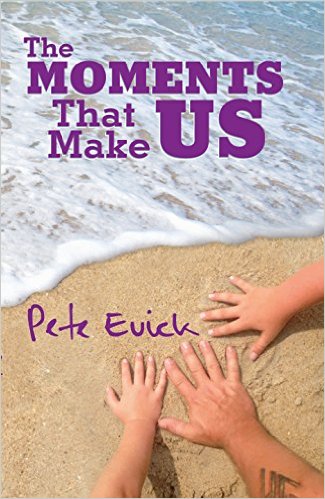
I wanted to share something positive with my readers & fellow authors today, something which has touched me in such a profound way as a writer I think it bears repeating. As I am quickly learning, Pete has become a major inspiration in my life since reading his new book, THE MOMENTS THAT MAKE US. This book has spoken to me on so many different levels, but none so much as Chapter Fourteen.


TMTMU


There is no way I can possibly do this book, Pete, or the message behind the book justice, but if you will indulge me, I’d like to share a few passages from Pete’s book which has spoken the loudest to me. I hate to butcher the book and the message like this, but to understand the point of my post, I feel I must post a few excerpt paragraphs, even though I think the message does not come out as clear as it does when reading the entire chapter, or book, for that matter. I would like to point out this is not the entirety of the paragraphs, just small excerpts that have made the most impact on me.


“…..The music of the era was powerful. I was sold on the energy and the sound. But Poison was different. While they made the trek to Hollywood to make it, they weren’t from the West Coast or some big city. Those guys were from a small town in Pennsylvania – just one state away from Virginia. Maybe that’s why I could relate…..

Cry Tough” had struck such a nerve with me that I begged Todd to let me take the tape home that night. He agreed, and I played that tape over and over again. Suddenly, the second verse came screaming out at me.

Life ain’t no easy ride,
At least that’s what I’m told.
But sometimes a rainbow baby
Is better than a pot of gold.*

 And there it was. The single most defining lyric of my life, to this very day….

“Cry Tough” gave me validation to be poor, to struggle, to not make it. It gave me permission to chase my dreams at all cost…..”


I struggle on a daily basis with being a writer. Mostly, it’s guilt, a feeling of inadequateness with a good, strong dash of jealousy added into the mix. I’ve got to the point where I avoid FB like the plague because it stresses me out to see all the posts by fellow authors of new releases coming out, the author events, the launch parties, etc.

No matter what I’m doing, I always feel guilty when I’m not writing. Never mind I have a full time job, a husband, kids, and a house to tend to. I know I have 900 different things that require my attention any day of the week, I know my regular job requires long hours and lots of stress that I had not bargained for, but I still feel guilty when I’m not writing.

I know there is no way for me to push out a new novel every month or two, and if I did manage it, it would be utter crap and I wouldn’t be able to bring myself to put my name on it because I’m such a bleeding heart artist I refuse to put out anything I’m not 100% sure is the absolute best work -I- can produce.

Mentally I KNOW these things, know I’m doing good to get a single book out each year, but I still can’t help but feel I should be doing more. I’m probably harder on myself than anyone else could ever be, know there is really no reason for me to feel guilty about the lack of time I have to write when I have so many other things I can’t put off which require my immediate attention, but yet here I sit, reminding myself I have 2 unfinished novels I need to be writing even though I have 2 closets that need to be cleaned out before school starts in a few days. Even though I know in the back of my mind that my department would probably crash and burn if I were ever to resign from my position, I still can’t help but look at my complete lack of success at both my regular job and my writing career and feel like I am a complete failure.

What, exactly, have I accomplished in the last twenty-two years of my life?

A few weeks ago I bought Pete’s book and read it during my lunch hours while at work. I’ve laughed, I’ve been brought to tears, I even saw red and wanted to psycho-momma on a certain unnamed teacher. But Chapter 14, aptly titled “Sometimes a Rainbow is Better than a Pot of Gold,” was the wake-up call I truly needed as a writer.

I know most of us writers push ourselves too hard. We try to keep up with everyone else, strive to make a name for ourselves and are out there doing all this on our own. We have chosen to go indie despite the massive amount of time involved, the over-saturation of the market, and the all-consuming work which never seems to end. We are so busy trying to obtain some far-off goal where we can finally say “I made it as a writer!” we forget —sometimes a rainbow is better than a pot of gold.—

I want everyone to sit and really think about that for a second. For me, the pot of gold would be a massive contract with a large advancement where I could quit my job and write full time and become a major bestseller, or better yet, the ultimate goal would be a multi-million dollar movie deal. But I also know getting that type of deal would come with deadlines, huge responsibilities, and more pressure than what I am currently under.

Right now, I AM living in my rainbow. I have a great job, granted some days I loathe it and want to smack half the company, and I am certainly underpaid for the amount of work and total crap I have to deal with, but all-in-all, I can’t complain. When I have fellow coworkers and managers tell me quietly how much my VP thinks of everything I accomplish at my job, I know I am needed, even if I’m not really appreciated. It’s not exactly glamorous but I’m good at it, and I’m also lucky to have it.

I often say I have the best of both worlds. I have a job which keeps a roof over our heads, with time spent away NOT thinking about books, and I also have this wonderful passion for creating stories which I am able to share with people thanks to Amazon and social media. But I think the simple fact sometimes a rainbow is better than a pot of gold gets lost on all of us. We are so busy chasing our dreams we forget to stop and appreciate what we have already accomplished. I’m not saying I wouldn’t jump at the chance to write full time, or work on a movie project, or any number of other projects, but I also am very proud of the seven books I’ve managed to publish in the past four years. It’s not exactly the dream career I wanted for myself, but it certainly is no small feat.

I guess what I’m trying to say is, take the time to appreciate the small things you have accomplished. Live inside your rainbow and be happy to have it. Don’t ever stop chasing your dreams, but don’t forget to savor the ride. I never set out to be Anne Rice, and I think it’s time I stopped comparing my success to the success of others.

I have always looked to Bret as my mentor, for giving me the drive to keep writing and chasing my dreams no matter what life has thrown at me. In the past year, I have become an avid Black Veil Brides fan who both admires the hard work and dedication they have to their music and their fans, as well as strive to remember they didn’t just have all of their good fortune handed to them. They worked hard to get it, and so I must too.

Today, I came across another man who has also worked hard to earn what he has accomplished, and I am happy to add Pete Evick to my short list of mentors. Today, I am not just striving to keep chasing my dreams like Bret, but I am also striving to be more like Pete, and learn to be happy and appreciative of the rainbow I have, because right now my rainbow IS better than a pot of gold.

So thank you, Pete, for being a totally awesome guy, and for sharing your words of wisdom and self-discovery with your fans. I can’t say enough about how wonderful and inspiring this book has been to me. And if I’ve went so far off base on the message your words were trying to convey, please forgive me!


*Cry Tough – words and music by Bret Michaels, Bobby Dall, Bruce Johannesson, and Rikki Rockett. All copyrights to their original creators where applicable.

Interview: Nicholas Tanek

Today I had the pleasure of interviewing Nicholas Tanek, author of The Coolest Way to Kill Yourself.

Tell us a little about yourself – your education, family, etc.

Nicholas Tanek: I am the author of The Coolest Way to Kill Yourself and Chipped Black Nail Polish. I was a punk rock skater kid from New Jersey who got swept away in the New York City rave scene in the 90’s. Although I was doing tons of drugs, I graduated from Rutgers University with a degree in English. Basically, I was a middle class white kid who grew up in Edison and New Brunswick, NJ. I love to write. I love being involved with anything dealing with the creative arts. This includes writing, music, comedy, and art.


What started you on your journey to become an author? 

Nicholas Tanek: The love of my life died in 2012. Her name was Lynn and she was 37 years old. We both loved being creative and we loved to write. All this time, I would write poems and stories about and for women. I would get published but she would not. She was very upset about this. She would always say, “No one is ever going to write anything for or about me.” So, I wrote a book for the woman who thought that no one would write a book for her.  Hurricane Sandy hit New Jersey and I only had a generator. So, I used that to power my laptop. I wrote this tribute for her. At the same time, it became a memoir. It was also very therapeutic for me. In turns, it became therapeutic for the readers too. The book is titled The Coolest Way to Kill Yourself. After that, I wrote a prequel titled Chipped Black Nail Polish, which is a coming of age story about my first love. It takes place in the 1989 New Jersey/New York punk rock scene. The positive reaction to The Coolest Way to Kill Yourself inspired me to write Chipped Black Nail Polish. Now, I have been inspired to write my next book.


What is a usual writing day like for you? 

Nicholas Tanek: I usually write during the evenings. I like to be emotionally honest and keep the writing style rooted in whatever emotion I am feeling. I need music. Every part of the book has a song that goes with it. So, I play it while I write the scene. Then, we edit, edit edit. After that, we edit more.


Do you have a specific writing style? Are you a plotter or a panster when it comes to writing?

Nicholas Tanek: I definitely start with a loose outline in my mind. The main aspect is me getting the words onto page. Because all of the stories are true, I know the beginning, middle, and the end. First, I have to get it out of my head and onto the page. Second, I have to make sure the structure works and there is a flow to the work. Finally, the editing makes it all come together.


How much of your work is based on first-hand knowledge? Is anything you write based on real people/events and if so, how did they inspire you to create your work?  

Nicholas Tanek: My books are all true. I just change the names and label them fiction for legal reasons.


Do you get writers’ block and if so, how do you overcome it? 

Nicholas Tanek: I look at it this way. I only work when I feel inspired. If I am not inspired, I do not want to put out anything. I absolutely love writing, but I only want to write something that I feel inspired about. So, I will go through a period of time when I am not writing, but that means that I am helping other creative people with their creative work. Creativity inspires creativity. So, in my opinion, surrounding yourself with creative people is a wonderful way to overcome writer’s block.


Who are your main influences in the writing world? Do you have favorite authors? 

Nicholas Tanek: I like Anais Nin, Hunter S. Thompson, Herman Hesse, Richard Shannon, and many more. I also like comedians who write. Patton Oswalt, David Cross, Chris Gethard, and Julie Klausner are very funny authors. I think Tom Scharpling should write a book.


Are you trade or indie published? How has your experiences differed from your expectations prior to becoming a published author?  

Nicholas Tanek: I come from the DIY punk rock mentality. I want total control of my work. I am not in it for money. I write books to create art and because I have a need to be creative. So, I am an indie author. With that being said, I welcome talks with publishing companies, but I would want creative control.


Do you have any regrets as an author? 

Nicholas Tanek: In The Coolest Way to Kill Yourself, there was a memory that I wish I included. I was on ecstasy at a rave in Queens during the 1990’s. The fire department shut it down. The Evolution Vibe Tribe asked for one more record to be played. Even though the whole night was electronic dance music, the DJ played “Rapper’s Delight” by The Sugarhill Gang. The crowd went wild and danced their asses off because they knew it was the last dance. I wish I included that in my book.


What is the hardest part about being a writer?

Nicholas Tanek: I do not want to hurt anyone with my writing. At the same time, I write from real experiences. So, there are people who I love who may get hurt if I write about them. That breaks my heart. Still, I have an overwhelming need to be honest with myself and true to the story. So, dealing with that is the hardest part of being a writer.


How long on average does it take for you to complete a book, from the first time you sit down to write until it becomes a published book?

Nicholas Tanek: The first book took more than a year to write and edit, but it took a lifetime to live the story.


Do you have any advice for aspiring writers? 

Nicholas Tanek: Write. Be original. Just write… even if 99% of it is garbage, that 1% may be good. One sentence can change everything. The key is to actually write that one sentence. And, for the love of everything cool, be original.  There are too many people just trying to write to make what they think will sell. Be original. Write for yourself and from the heart.


What are you currently working on?

Nicholas Tanek: My new book is a sequel to The Coolest Way to Kill Yourself.  It is a tribute to the wonderful, wild, and weird people of the New Jersey / New York BDSM fetish community. It is about how people deal with loss and emotional pain through sex. When Lynn died, I was devastated. So, I used the BDSM fetish community as a way to distract myself and ultimately, heal myself. Although it is a very sexual book, it is not masturbation material. The book is a celebration of kink, but mainly, a celebration of friendship. It is very emotional. Hopefully, it may help very sexual people who are going through an emotionally tough time. The working title is Your Kinky Friends.


Follow Nicholas on the web:

Facebook:  https://www.facebook.com/nicholas.tanek

Website:  http://thecoolestway.net

Twitter: @NicholasTanek

Interview: Author Kathy Steinemann

Kathy-Steinemann-300x300

Today I had the pleasure of interviewing Kathy Steinemann, author of Megan and Emmett (WIP).

Kathy has loved writing for as long as she can remember.

As a child, she scribbled poems and stories. During the progression of her love affair with words, she won public-speaking and writing awards. Her career has taken varying directions, including positions as editor of a small-town paper, computer-network administrator, and webmaster.

Her short stories and poetry have appeared in various online and print publications, including Shoreline of Infinity, Boston Literary Magazine, and The Quarterday Review.

She has published multiple novels, anthologies, and self-help books. Kathy tries to write something every day. Her WIP is another anthology in the Megan and Emmett series.

CreateSpace-Graphics-Primer-600x450

Tell us a little about yourself – your education, family, etc.

I pursued several avenues of post-secondary education, but always gravitated back to my first love: writing. I’m a homebody who enjoys a good novel or television show that engages my imagination. My family—a long-suffering husband, three grown children, two grandchildren, and a pair of mischievous cats—help keep me young at heart.

What started you on your journey to become an author?

I can’t name a single thing. However, I can remember losing myself in fiction as a child—running through meadows with the Black Stallion or speeding through space to distant planets. Winning a few writing and public-speaking contests helped fuel my enthusiasm.


What is a usual writing day like for you?

I don’t have an ironclad routine, but I generally manage social media tasks early in the day. I might do a critique at Scribophile, transcribe information from sticky notes into my computer, record new ideas, and then tackle the serious task of writing, editing, or designing book covers. I get away from the computer every twenty-five minutes or so—with the help of a nagging timer—to stretch my legs, refill my coffee, or see what mischief the cats are up to if they haven’t been trying to take control of my keyboard.


Do you have a specific writing style? Are you a plotter or a pantser when it comes to writing?

I attempt to make every word count, omitting most adverbs, employing active verbs, and keeping descriptions—especially of characters—to a minimum. I believe that if you tell readers a woman is a long-distance runner on a trail in the woods, they’ll see what she’s wearing. Why bore them with details they’ll forget in a few paragraphs? Do they need to know she’s wearing turquoise-blue jogging pants and a red sweatband? I keep to the important facts. Does she rub her elbow because she hurt it playing tennis? Will that affect how she reacts in five minutes when she’s attacked by a strange man in a ski mask?

Most of my writing is of the pantser variety. I prefer to let my characters and story lead me in unexpected directions.


How much of your work is based on first-hand knowledge? Is anything you write based on real people/events and if so, how did they inspire you to create your work?

Most of what I produce is pure imagination, although real life sneaks in. The Megan and Emmett series, while not based on me and my husband, does have snippets that mirror our conversations and interactions. It’s always fun to hear friends speculate about what’s real and what’s fiction after they’ve read Nag Nag Nag, the initial book.


Do you get writer’s block and if so, how do you overcome it?

Yes and no. I find that writer’s block is usually a byproduct of staying away from my computer and finding excuses when I don’t feel up to writing. As soon as I scrap that mindset and open my word processor, the ideas start to flow. If I bog down trying to think of an appropriate word or phrase, I walk a few figure-of-eights around the room. That usually gets the creative juices flowing in the right direction.


Who are your main influences in the writing world? Do you have favorite authors?

I can’t say I’m influenced by anyone in particular. I admire Stephen King’s minimal approach, and I enjoy Ray Bradbury, Fredric Brown, and Rod Serling.


Are you trade or indie published? How have your experiences differed from your expectations prior to becoming a published author?

Indie all the way. I’ve never sought an agent or traditional publisher. With so many big-name authors switching to the indie model, I’ll probably stay where I am. I didn’t have many expectations when I began this journey, so whatever happens is a new experience.

Do you have any regrets as an author?

Yes. I wish I had started this process decades earlier. I have so many stories in my head and never enough hours to tell them. Oh—marketing. I regret having to strut my own stuff. If I didn’t have to market, I’d be more productive.

What is the hardest part about being a writer?

Forgetting that fantastic idea I had a few hours ago but never wrote down because it was so mind-blowing I’d never forget it. Reminder to self: Jot down that idea you had as you started on this interview. You know the—Crap! Why do I hear Britney Spears in my head singing “Oops! … I did it again”?

How long on average does it take for you to complete a book, from the first time you sit down to write until it becomes a published book?

That’s an impossible question. I have one novel on my hard drive, the third in my Sapphire Brigade Series, that has been gathering digital dust for over a year. It took me several months to research, and I’ll publish it after I run the earlier books through a critique cycle at Scribophile. My most recent creation, CreateSpace Graphics Primer, required almost as long due to the extensive graphics and numerous proofs I had to order before I was satisfied with it. I’m no George R. R. Martin, but I enjoy a relaxed approach. Rushing into publication is a typographical disaster waiting to happen.


Do you have any advice for aspiring writers?

Yes. Learn the rules and then learn when to break them, or you’ll end up as a copycat without a distinct voice. Advice can be like pasta—with exquisite texture when cooked properly, or pasty when overdone.

Oh, and avoid comma splices, I hate comma splices, they make prose difficult to understand, did you see how many I used, don’t they make this section complicated to comprehend? ’Nuff said. [Kathy grins.]

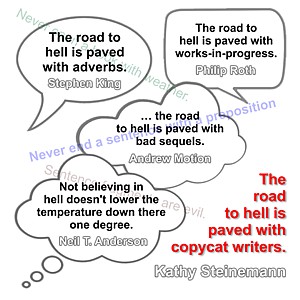
road-to-hell-300x300 

Here’s an excerpt from the next Megan and Emmett WIP, from the chapter, “Let Tiffany Take Care of You”.

“Hello, Mr. Wal—”

“Emmett. Please call me Emmett. ‘Mr. Walpole’ is too formal, considering what you’re about to do to me.”

“All right, Emmett. I’m Tiffany. You just lie back, think happy thoughts, and I’ll take good care of you.”

“Be gentle.” Heh heh. She can take care of me any day. What a beaut.

“You look nervous.”

“Nah, not me. I’ve been here a time or two.”

“Try to relax.”

“Relax? How can I relax with you standin’ over me?” With those gorgeous brown eyes. And whatever that is in your hand.

“There we go. How does that feel?”

“Just a little more to the left.”

“Better?”

“Mmmmmhmmmm.”

“All right.”

“I’d—”

“Shhhhhhhh. No talking.”

“Mmph.

“Oh, I’m sorry. I didn’t mean to hurt you.”

“It’s okay. I like the rough stuff.”

“Well, I don’t. I’ll try to not to do that again. You’re all tense now. My bad.”

“Mmph.” Fishing. Fishing. Think about fish—


~*~


“Emmett … Emmett … Mr. Walpole?”

“Mmph.” She musta been gentle. I dozed off. Damn cat kept me awake all night.

“You were sleeping? Nobody has ever fallen asleep on me before. For a minute there, I thought maybe you’d passed out.”

“I can take whatever you dish out. Like I said, this isn’t my first time.”

“All done. How do you feel?”

“Pretty good. Much better than when I came in. How much do I owe you?”

“Nothing. Your senior’s medical insurance covers reattachment of dental bridges.”


Follow Kathy on Social Media:

Facebook: http://facebook.com/kathysteinemann.author

Twitter: @kathysteinemann

Website: KathySteinemann.com

Author Interview: DeWayne Twitchell

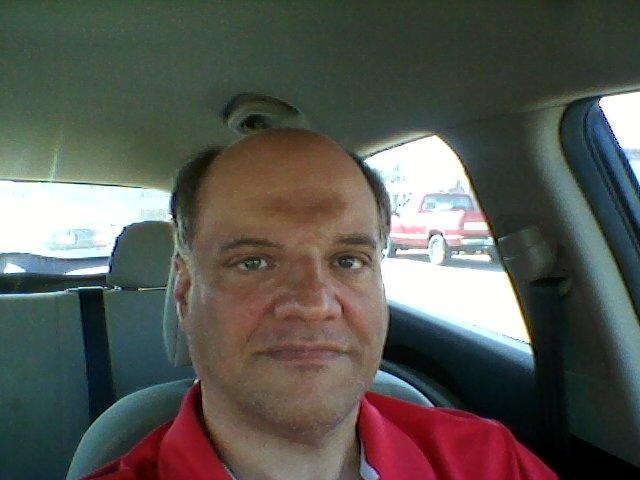
DEWAYNE 5


*I apologize for the poor formatting on this. I had to enter quadruple spacing between everything in order to get any spacing to show up in any of it. Otherwise, it was all running together.


Today I had the pleasure of interviewing DeWayne Twitchell, author of Asian Haze and Night’s Plutonian Shore and Other Stories.


About the author:
My name is DeWayne Twitchell. I live in southern Illinois and am the author of two books currently out: a mystery novel called ASIAN HAZE, and a science fiction and fantasy short story collection called NIGHT’S PLUTONIAN SHORE AND OTHER STORIES, both published by Lang Book Publishing, Ltd. I am currently in the early stages of a new novel. This new book will continue the series I began with ASIAN HAZE about the private eye Randall Arthur.


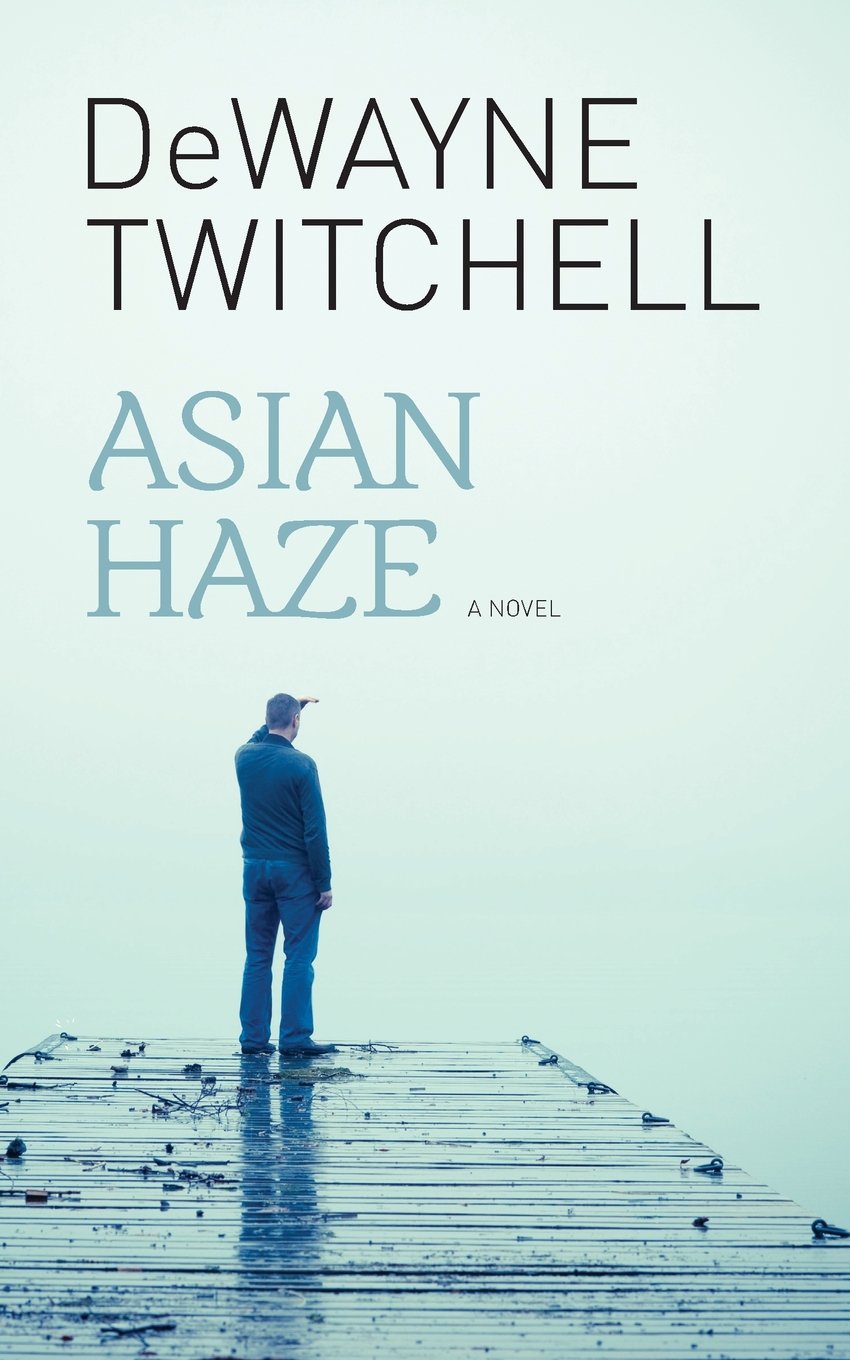
ASIAN HAZE
Tell us a little about yourself – your education, family, etc.
I work presently at a group home for mentally-challenged adults, but have been writing for several years now. Single (happily), and live in a very quiet small town in Illinois. Have one older brother and one younger sister, three nieces and three nephews.


What started you on your journey to become an author?
I’ve been a reading junkie since I was a kid, and it eventually got me to dreaming of wanting to write my own stories.


What is a usual writing day like for you?
When I’m working on a book, I usually try to write for four or five hours, at least.


Do you have a specific writing style? Are you a plotter or a panster when it comes to writing?
In the type of books I write, which are mysteries, I try to be a plotter, though I think character development is as important, to make the reader care about the story and what happens in it.


How much of your work is based on first-hand knowledge? Is anything you write based on real people/events and if so, how did they inspire you to create your work?
A lot of what I write about comes from my imagination, and I have to research the finer points of what I’m writing about to try and get it as accurate as I can. Sometimes I will write about a real place and transpose it to another location. As for the characters, I don’t have a specific character that is like a real person, but maybe bits and pieces of someone’s personality ends up in one of my characters.


Do you get writers’ block and if so, how do you overcome it?
Sometimes the words don’t come out as easily as I’d like, though I don’t really think of it as writer’s block. I’ve found that even if I persist in writing something, even if it’s not up to the standards I usually demand of myself, eventually that bad writing will lead to something better.


Who are your main influences in the writing world? Do you have favorite authors?
I could talk about my influences all day, there are so many. It started with Ray Bradbury, and then to other science fiction writers. Then I went to reading fantasy, horror, thrillers, mysteries, etc.


Are you trade or indie published? How has your experiences differed from your expectations prior to becoming a published author?
My two current books are published by a small publishing house out of New Zealand called Lang Book Publishing, Ltd. Because it is a small house, I have had to do a lot of self-promotion, and 99% of that has been on the Internet: Facebook, Twitter, etc. Social media has changed the way not only how authors promote their books, but how they write and publish them as well. Indie and trade publishing has exploded in the last few years because of social media, and the new avenues it has created to get new writers exposed to an audience. When I first began having dreams of being an author, the publishing world was a lot different, and I based my fantasies of success on that world. I’ve had to readjust those fantasies to fit the new world. An example would be an interview like this one. I’ve done three or four interviews since being published, and they all have been responding to questions online or via e-mail, instead of sitting down with someone in a room and talking to them.


Do you have any regrets as an author?
Probably that I didn’t start doing this earlier in my life.


What is the hardest part about being a writer?
Coming up with something that you feel is good enough for other people to want to read. It is not easy to get the words down exactly as you want them to properly tell the story you want to tell. Most of good writing is rewriting and editing, over and over until you can get it as good as you can.


How long on average does it take for you to complete a book, from the first time you sit down to write until it becomes a published book?
This first book, ASIAN HAZE, was an on-and-off project that took several years for me to finish, because of other things going on in my life. The new book hopefully will be finished in late 2016, though that is not written in stone. But I’m going to try. When I was writing ASIAN HAZE, I didn’t have an audience, small as it is, waiting on a next book. Now I have a few people who actually want to read a new DeWayne Twitchell novel, and it puts more pressure on you to get it done as quickly as you can, but still have it as good as it can be.


Do you have any advice for aspiring writers?
Read as much as you can, both the good and the bad stuff. Write as much as you can. And if you truly believe in your talent, be persistent and never give up on your dream.


This is the opening from the new novel in progress, tentatively titled, FAMILY DYNAMICS:
“All happy families are alike; each unhappy family is unhappy in its own way.”
Leo Tolstoy
Anna Karenina

CHAPTER 1

The Void was approaching.


That was what he called it now within the recesses of his stroke-damaged mind. Not death, not a transition into an afterlife so desired by the human psyche—as long as if it didn’t involve fire, brimstone, or any eternal agony in general. But the Void, with a capital V. Because he was now of the belief, after long and often psychologically painful soul-searching, that there was no heaven, no hell, no place where all the souls of the deceased—good or bad—would reside. No place that both Mother Teresa and Adolf Hitler would call their eternal spirit home. No conscious afterlife of any kind. Just a great nothingness, like the one before his conception.

 
Joseph Bowles was resigned to the impending end of everything he had accomplished, experienced, and felt. But what he was not resigned to, what he could not fathom, was how his eldest son, who stood at his bedside now in tears waiting for his father to die, could have betrayed him in the manner that he had done. After all the love and support he had given him.


He so wanted to say something to him now, but the stroke had stolen the ability of speech from him. He tried to transfer his hurt and hatred from his heart into his eyes. But he didn’t know if it registered. He was so weak. Let me die, oh please let me fucking die! Let me die so I won’t have to feel this goddamn heartache!

 
Roger Bowles and his wife Nancy were the only ones with him now. The doctor had seen Joseph an hour ago and told Roger and Nancy that there was nothing more that medical science could accomplish and that the end was near. A nurse had been in about ten minutes ago to check on the near-death patient, and had then left Roger and Nancy alone with Joseph. Their two teenage children had been there earlier to say their good-byes to their grandfather. It was too bad about Bryan, but he had made his choice long ago and had held to it.


He was a member of this family in name only. Roger had not invited his brother to be here at the hospital to say farewell to his estranged father and he had not expressed any wish to be there. Roger figured that Bryan would refuse the invitation, so why bother?


Joseph, in his time of dying, thought of the son he had lost. He was thinking of Bryan when the stroke struck him. Because Bryan was Joseph’s only hope to salvage what damage would be done by his brother. He had set events in motion, before the stroke. The stroke prevented him from finishing what he had to do in totality. But he hoped that what he had been able to do would be enough to get the ball rolling. And he hoped that Bryan still cared enough to do something, that his estrangement from his blood family was not so severe that if he learned the truth of what his brother had done, that he would let it pass. He felt he knew Bryan well enough to believe that he would not. That, despite everything that had happened to rend the family, Bryan’s sense of right was still ingrained within him. It was a shot in the dark, but it was all Joseph could take. And the pity was that he would not live long enough to know if he had hit the target, or even come close.


He could hear the cold beep of the heart monitor grow fainter, slower. He knew what was coming and was brave enough to accept it and whatever came after, even if it was nothing. And if he did reach a fiery hell, could it be worse than the suffering that Roger, who had seemingly always stood by him, had laid upon his heart that has already experienced enough heartache in his lifetime? And could a heaven truly make that suffering meaningless? For the first time, Joseph was glad that his beloved wife Tara was dead, so she would not have to bear her own heartbreak. But Roger and Nancy’s kids were still around, young and hopefully just in the early stages of long and happy lives. But if they discovered what their father had done, how would they deal with the pain? That thought further broke Joseph’s heart; that two innocent children should have to suffer for the sins of their family. And what of Bryan’s children, who were even younger? Maybe it was for the best if there was simply nothing after death.


The last thing Joseph Bowles saw was Roger and Nancy standing above him, both with tears in their eyes, arms around each other. The last physical sensation that Joseph felt were the tears leaking from his eyes.


Goddamn you, Roger.


The Void arrived.


Approximately ten minutes after Joseph Bowles drew his last mortal breath, his son Roger, after the requisite tears and hug with Nancy, got into the elevator and descended to the first floor of the hospital. He was no longer weeping, no longer had a need to weep, at least for the moment. He walked out with a quick step and stopped under the awning of the entrance. He took out his smart phone, scrolled through the phone number directory until he found the one he wanted and speed-dialed it. Roger just had to wait a few seconds before connecting.


“It’s me. The son of a bitch just died. Begin the operation,” Roger said. He disconnected without waiting for an answer from the other end. Sorry you’re going to miss all the fun, old man, he thought.


Get connected with DeWayne on social media!
Facebook: https://www.facebook.com/DeWayne-Twitchell-Author-813350492076949/
Twitter: @ddt1965
Website: http://ddt19652.wix.com/asian-haze