Indie Authors – Common Denominators & Why So Many Fail

I rarely come across authors who I actually click with when it comes to the publishing business. I’ve been around this game for over twenty-five years. I’ve been on both sides of the platform, something which has given me a lot of insight into how the industry has changed, evolved, risen, and floundered. I’ve read so many how-to blogs and followed gurus and read books and researched until I feel like my brain has melted and reformed at least a hundred times over the past two decades. When you have this many years under your belt and have watched the industry like I have, it’s no wonder one of my pet peeves is authors who have been in the game for just a few years who seem to think they are experts on the business. For some reason, people seem to think success equals knowledge – because they managed to get a single book in a huge boxed set to rank it somehow gave them magical knowledge on how the industry truly works. Other authors see the ascension of a literary god who rose above the ranks, a shiny beacon of hope. What I see are authors who haven’t managed to letter outside of those boxed sets. I’m going to repeat this – success does not necessarily equal knowledge, and unfortunately, knowledge does not always equal success.

That’s why it’s refreshing when I come across another author who sees the same patterns I do, who has studied the business like I have, and who is over there shaking his head at the same stupid shit I am, asking the same thought-provoking questions I do, and just realizing there is someone out there other than myself who understands this business on all levels – not just the business end, not just the artistic end, not just on the marketing end, not just on the trendy end – but someone who sees the whole picture and understands the fundamental basics of economics and how other people’s business practices can directly affect everyone else in the industry.

Which brings me to the point of this post. At it’s core, I have noticed only two things which successful authors seem to possess in order to make a name for themselves, and that is money and a support system.

Let’s take a closer look at these. First – money. We’ve all heard the old saying that it takes money to make money. That is equally true in the publishing industry. Even if you do not have the funds to hire fancy PR firms, you will still need to purchase the basics of publishing – an editor, someone to format your manuscripts, and a graphic artist.

But let’s look even deeper. Those who are really successful didn’t get that way out of sheer luck. Someone was funneling money into marketing and promotional resources, regardless of whether it was the publisher or the author. In other words, someone was paying to hire the right PR companies and the right marketing firms to build a buzz around their books. They were investing in marketing ads, and maybe even paying someone to ensure their book got in front of the right people. As much as I hate to keep bringing this damn book up, we can still learn from it. Think about 50 Shades. The publisher managed to convince over a hundred million people that this was the book to buy. Even when readers were leaving scathing reviews and everyone was talking about how bad it was, even when readers were warning other readers to avoid it like the plague, even when book stores literally had tens of thousands of paperbacks which had been returned to them, people were still rushing out by the thousands to purchase it all because of really great marketing and a huge grassroots movement.

Now, most of us can’t do anything about the money side of things. Most authors work full time jobs and are already operating on a virtually non existent budget, and I’m no exception. But what we can do something about is our support system.

Think about it. Having the best PR company in the world isn’t going to help sales if there aren’t enough interested readers. And having the right mix of readers who are eager to share their love of a great book is worth far more than any marketing budget a Big 5 publisher could possibly throw your way. Think about Twilight and how many of your friends were talking about the series. I had friends who were rushing out to Wal-Mart to stand in line for hours just to buy the next book like it was the Black Friday sale to end all sales. I never once saw a stitch of advertising for that book or the movies, but everyone I knew was talking about it for years. The same goes for Harry Potter. It wasn’t until those books starting lettering before you actually saw any advertisement for them.

When was the last time you told all your friends about a really good book, or a really great movie, or a really awesome restaurant? We do it all the time, and by doing so we have become part of a support system which helps push sales.

We all need some type of support system, and it has to start somewhere. We can’t always depend on people in our social media feeds to share our newest release or leave reviews. Bloggers are hit or miss, and newsletters seem to be a fad which are good one year and bad the next. But in order to really be successful, to really build a buzz about our work, we need a support system of readers who are willing to promote our work, leave reviews, and share their experiences with their peers. We all know word of mouth is the absolute best type of promotion but is also the hardest to foster.

And this last common core asset is the reason why most indie authors fail. I’ve seen this and experienced it on many levels firsthand. It’s really no great mystery on how or why the authors in these boxed sets are lettering. When you have 20 to 30 authors pooling their collective resources together and promoting one book together then great things are bound to happen. But this fundamental core asset is the very reason why these same authors can’t letter outside of these sets – individually they lack the support network required to truly market their books. Imagine if these same 30 authors were to stick together and help market/promote the individual’s books? How many of those authors would then be lettering with a single book rather than just a boxed set?

Unfortunately, authors seem to not want to play nicely with anyone else. They want you to help them, but when it comes time to reciprocate they all decide they don’t want anything to do with you.  I’m reminded of toddlers playing in a sandbox – they will happily play with the other kids’ toys but when asked to share, they quickly begin screaming that it’s their toys.

And this is why we can’t have nice things.

No one is willing to put aside their competitive nature to see the larger picture of what they could accomplish if they just worked together. While Anne Rice may be my competition, you can bet your sweet ass I’d team up with her any day of the week. Those authors who have succeeded do so because they have a support network to help share their books and promos. Whether it is a team of readers or a team of bloggers or a team of authors makes no difference. And until we all start working together and stop thinking of this as a one-horse race, we are all doomed to eventually fail.

Why Newsletters May No Longer Work for Indie Authors


As an author, it’s something we’ve heard from every author, marketing “guru”, and publishing company – you need a newsletter. When asked why you need one exactly, most likely the answer is something along the lines of “it’s the most effective marketing tool because people who subscribed want to year your news. Plus, unlike social media, your email is going to 100% of your audience versus just 5% of your social media platforms.”

According to these same “gurus”, you also need a social media platform, for pretty much the same reason as above – “it’s the most effective marketing tool because people who follow you on social media want to hear your news.”

Here’s the simple, cold-hard truth of the matter – newsletters are not any more effective than social media. As a matter of fact, most small time authors are reporting the exact opposite.

I know, I know, people have been hammering it into your head ever since you started writing that you need a newsletter. But let’s face it, most newsletters only have roughly a 10 to 15% open rate, and those who do open only have approximately a 1% click-through rate of actually clicking on whatever new book you are offering them. Based on these numbers, even if you were able to get a 15K subscriber list together, only about 2K of those subscribers are going to actually open the newsletter, and of those only about 20 are going to click-through. And the buy-through rate? It’s about 1% as well, meaning out of 15K subscribers you may have a whopping 2 to 10 people who may actually buy your book. And given that the market is super saturated and everyone is trying to entice readers into signing up, constantly trying to gain new subscribers to replace those you’ve lost – it’s a whole lot of work for not a whole lot of return.

So let’s break this down and discuss why people are no longer opting in, and staying opted in, to newsletters.

1 – Social media. Let’s face it, I’m a complete and total fanatic when it comes to Bret Michaels Band. Yes, I signed up for his newsletter, but guess what? I never open it. That’s right, despite me being the biggest BMB fanatic on the planet, I never open the newsletters. And you want to know why? Because of social media. Any time I want to know what is going on with the band, I surf on over to the band’s FB page or one of the band members’ pages to see what they are up to. If I want to know where they are playing I go to Bret’s website and check out tour dates. Bottom line, I don’t need to read his newsletter to find out all I want or need to know about the band and what is happening simply by following them on social media. Even when I’m not seeing their posts in my feed, I still know what is going on with them because I check out their pages and other social media on my own. So even though I am subscribed to a newsletter, I am one of many, many people who delete it without ever opening it.

2 – Organic vs inorganic. Because social media makes it super easy for everyone to stay connected despite FB’s algorithms, it’s getting harder and harder to get people to actually sign up for a newsletter. And if they are not opening it in the first place, getting them to subscribe is only part of the battle. Many times, authors are being forced to ‘entice’ readers by giving them free stuff – either a free book/short story for signing up, or trying to keep them signed up by sending out freebie shorts in subsequent newsletters. This is considered inorganic subscribers. These are subscribers who would not normally have signed up and only did so to capitalize on the free item you were offering. There are many FB groups and marketing companies who offer newsletter swaps etc. where a huge list of new subscribers are pulled in by the offer of free reading material. Unfortunately, many authors notice a huge unsubscribe rate once their first newsletter goes out after offering this freebie.

Another problem seen when offering free material in exchange for signing up for your newsletter are the “dead” leads. These are people who use alternate emails to sign up for the newsletter (read – just created email account for the sole intent of signing up for your newsletter), get the free content, and then never check the freshly made email address ever again. So while you have a subscriber, they never open the email, thus making them a “dead” lead.

The problem with offering free content in exchange for a subscription is twofold – first, you are getting someone who would not have normally signed up for the newsletter in the first place, and second, offering free content oftentimes just pulls in the freebie seekers who have no intentions of staying on your list once they have their free content. There are entire FB groups dedicated to helping readers find free books, including signing up for newsletters only to unsubscribe as soon as they have their freebie.

Doing newsletter swaps where you give other authors free advertising space in your newsletter in exchange for the same thing can backfire as well, oftentimes leading to unsubscribes from organic readers. Why? Because organic subscribers who signed up to hear about your news can be put off when they realize your newsletter just became a giant advertising platform to push other authors’ books onto them.

The ease of connecting on social media is often the reason why it is so hard to get organic subscribers in the first place. Unless you publish on a regular basis and send out newsletters with relevant updates every month, you will most likely also see huge unsubscribe rates from readers if it’s been a while since your last newsletter. This is because readers forget who you are or why they signed up for your newsletter in the first place. Others have so much spam and other junk coming in that they either delete the email after a while or unsubscribe in an attempt to weed out all the unnecessary emails they get every single day.

3 – Information overload. Devoted readers do not just read one genre or like one author. They devour books and oftentimes follow dozens of authors at once. Because of this, it’s pretty impossible for them to subscribe to everyone’s newsletters, especially when you have hundreds of thousands of new books and thousands of new authors hitting Amazon every day. They may sign up for a half-dozen newsletters at the most, and those lucky authors tend to be those who are already big names.

Think about how many emails you receive in a day. How many of them are newsletters that you actually open and read? Now think about all the different authors whose books you enjoy reading, all the different bands you like to listen to, all the different brands you like – and now imagine if you had signed up for a newsletter for every single one of those. How long before you went through unsubscribing to all but the ones you simply thought you could not live without? This is why thinking readers are going to subscribe to your newsletter and stay subscribed to it for any length of time is just plain silly, especially from a marketing perspective, and most especially if you are an unknown author. We are bombarded by advertisements all day every day. Signing up for newsletters is just another way of having pushy sales people trying to talk them into purchasing things they may or may not want.

4 – Money. But readers want to know about great deals and sales, right? Um, not exactly. Again, I use the same example from above. Would you really want to be notified by email every single time any author, band, or brand had a sale going on? There are far too many ways for readers to find out what is on sale than through newsletters, and most of those are already built right into Amazon.

If readers are price conscious they can simply use Amazon’s pricing filters to find what they want, and if they are on a budget it doesn’t matter when a book goes on sale. If they don’t have the money to buy it they are simply not going to purchase it. Sending them a newsletter reminding them your book is on sale for this week only isn’t going to matter to someone who has to wait until their next payday two weeks from now before they can treat themselves. Books aren’t like concert tickets. They are already relatively cheap even when full price, and since most indies do not sell their books for more than $5, discounting that already cheap book by a few bucks isn’t really going to matter to those who want to buy it in the first place. It might push someone who had already planning to buy the book to buy it a bit sooner, but all you’ve really done is crew yourself out of a better royalty rate.

To sum things up, newsletters only really work for authors who already have a huge fan base, and even those with huge subscriber lists are seeing lower and lower open and click-through rates. Most readers who are devoted fans are going to follow the author on social media and find out about new releases and sales that way. Many other authors have more success posting about their books and sales on their website or blog.

This isn’t to say that having a newsletter isn’t helpful. I still have one, but I do not depend on it as the sure-fired way to target marketing that everyone wants to hail it as. I do not advertise free content when people sign up, thus the few subscribers I get are organic, and I have less than a 1% unsubscribe rate. I send out a newsletter only once every three months, which is about how often I publish. I still find my most valuable marketing tools are still social media and my website. I use a newsletter as an enhancement tool, but I do not depend on it solely as a means to reach my audience. With so many ways to connect with readers, anyone who has been in this business for any length of time will tell you to utilize all the tools available to you, but do not expect or depend on any single one of them to work magic for book sales. After all, if it were that easy, we would all be bestsellers.

Kindle Corruption: My Take on the “How To” Marketing Manuals

If you’ve ever gotten ‘serious’ about becoming a best-selling author or making any type of substantial money off of your fictional writing endeavors, you have no doubt went to Amazon to peruse the “how-to” manuals when it comes to writing, marketing, and promoting your latest works. You probably joined no less than a few dozen “marketing” FB groups, and possibly became so overwhelmed with the sea of information and misinformation that you began to question whether or not you should even try to make a living as a fictional writer.

Looking at all the “how-to” books out there that promise everything from telling you the secrets to gaming Amazon’s algorithms and teaching you how to write books which will sell hundreds of thousands of copies to how to master Amazon product ads and Facebook ads, it all just seems to be a bit too good to be true.


Am I seriously the only one who looks at these types of books and wonders if anyone actually believes this shit? I mean, does anyone actually stop and think about what these books are promising on an intellectual level. It has to at least make a person question the validity of the promises, not to mention the sanity of one who would openly share such “top-secret” knowledge. If nothing else, these books should make a person ask two very important things – if it’s really so easy to become a best-selling author, then everyone should be able to become one, right? But in all honesty, we all know that simply isn’t true. So, of course, these books couldn’t possibly promise to make you a better author or that your books will suddenly become the next big thing. So that leaves the final question which seems to be such a no-brainer that it even makes me wonder how anyone pushing these types of books off on newbies could even rank on Amazon, much less sell actual copies – if you had really discovered the ‘secret-sauce’ to making a shit-ton of money selling fictional books, why on God’s green earth would you then write about it in a book and try to sell it to others?


This last part literally makes no sense to me. Let’s say I figure out how to completely master Amazon ads and get them to work for me no matter what pathetic piece of fiction I had just farted out. Why on earth would I then want to tell others about it? That is literally counter-productive. All I did was empower my competition thus making it even harder to make a living for myself in a market already saturated with way too many books. So exactly why would I be inclined to tell others about it? Sure, I might make a few quick bucks, but if what I was saying within the pages of that “how-to” manual actually worked, why wouldn’t I just write more fiction books and apply what I had learned to make an unending stream of income? Why would I want to tell anyone my secrets?


It’s like the whole “feed a man a fish” versus “teach a man to fish” type thing. I once had a friend who tried desperately to convince me to start a bunch of how-to videos on how to format books and then sell those videos despite the fact I also had a book formatting business on the side. My first thought was, if I teach them how to do it themselves then they won’t come to me to buy my services. It’s the same principle. If I actually knew how to make any book into a bestseller, I’d be cranking out books left and right, hire myself a huge ghostwriter team, and use that knowledge to propel my own books and name into bestseller status. I would hold on to that ‘secret sauce’ formula for as long as possible. The furthest thing from my mind would be to write a book outlining all my ‘secrets’ and then sell it. At the very least, I might start my own PR firm to put my ‘magic’ to work for others, but selling the secret? Yeah, I don’t think so.

So, I have to once again ask why on earth anyone who actually knew how to catapult any fiction novel into bestseller status or actually understood and could get Amazon ads to work for them would bother sharing that information? I honestly feel like these books are less likely to help the average author and more inclined to believe they were written solely to make the author of those books into bestsellers rather than help the people who actually bought them.

PS – if you actually manage to find someone who knows what they are talking about and is willing to share it, please, for the love of everything which is holy, buy that person a beer!

My Take on Scammers Breaking The Kindle Store


Forword: please note this is an opinion piece.

A recent blog post entitled “Scammers Break the Kindle Store” has now been shared on FB more than 5 thousand times in just three days. If you haven’t read the article, I highly recommend it. You can CLICK HERE to read it in its entirety. It’s very interesting, to say the least. I suppose what bothers me the most about this article is it accuses this author of using black hat tactics to gain a #1 spot on Amazon’s paid list with no other proof than the author not having any type of social media presence and had not used any of the “traditional” marketing ploys most indies use – lack of self-promotion via social media platforms and no Bookbub ads, in conjunction with the fact this author is “unknown” to the writer of this article. (As a side note, I’m pretty sure Amanda Hocking did not have a social media platform nor did she use Bookbub before she became one of the first authors to successfully sell a million copies of her own self-published books prior to being offered a 7-figure publishing deal. Oh, and Anne Rice hit the big leagues long before social media was even a thing.)

As I was saying, I would like to point out the Amazon ranking system routinely catapults “unknown” authors into bestseller status. I can’t even begin to describe how many times I’ve seen the words “NYT Bestselling Author” or “USA TODAY Bestselling Author” on the front of book covers on Amazon and have absolutely no clue who these authors are. I would also like to point out an incredibly wild notion – there are other ways to promote books outside of the internet. I know, crazy concept. I’m sure the author of the article actually has very good reasons for thinking this book hit this status with less than ethical practices, just as I know why he chose not to lay out the proof so other people can’t use the tactics to scam the system further. Unfortunately, by not giving a play-by-play and no other proof other than his gut, the entire article has become nothing more than an opinion piece, just like mine. As a matter of fact, I’m going to go so far as to call total bullshit on his entire article and way of thinking. Judging by his reactions to some of the comments, he’s just another author who seems to be frustrated with the entire craptacular we indies are forced to deal with every day.

With that said, I’m about to voice a very unpopular opinion about this, but I’m hoping you will bear with me and read through to the end. At the very least, I hope this will get you thinking, because I honestly do not believe the thousands of indie authors who have been sharing this article fully understands how the publishing world works – and by “publishing world” I mean not just the indie scene, but the trade publishers as well. As I’ve stated many times, I’ve spent the last twenty-six some years in the publishing business, either trying to break into the trade pub scene, learning from it, interacting with both NYT and indie best-selling authors, being an active publisher and indie author, as well as having friends in both the modeling and music industries. To say I’ve learned a lot is a vast understatement. But I digress.

I cannot, for the life of me, figure out why indie authors are so upset over this. Well, I actually do get why, but it goes back to the reason they are so upset is they fail to see the broader scope of publishing from a business aspect. It’s like the authors who never once think about how their own business practices affect the industry as a whole, so long as they are making money right now.

Let’s look at this from a business standpoint. This type of “black hat” operations happens all the time with traditional publishers. The only difference is they are spending hundreds of thousands of dollars to “underground” marketing and PR firms to do the very same thing and are pretty much keeping how they operate their business a closely guarded secret shared only among other big-boy publishers. While this is going on every single day with bestseller books in the trade world, with millions of dollars being invested and earned off of Amazon, we have indies who want to crucify the indie authors who are following in the big boy’s footsteps using the resources at their disposal – which would be Fiverr and the like. It’s not pretty, and we have fewer “underground” resources at our disposal simply because we are not rubbing elbows with the big boy publishers enough to be “in the know” when it comes to which “secret” firms we should be hiring. We have to ask around, and doing so means our business becomes everyone else’s business. Remember, it’s not what you know, it’s who you know, and to be honest, as indies, even if we did have access to the same resources as the big boy publishing houses, most of us simply do not have the money required to hire these people.

So let’s look at a few case studies. Hugh Howey admitted he used his own money, one of these underground market PR firms, and a whole lot of Fiverr people to buy his way onto the NYT bestsellers list and pad his serialized book with fake reviews. He openly admitted this on his own website and did an in-depth interview outlining how he went about achieving his letters. And yet no one went raging to Amazon demanding his account be revoked, nor did Amazon demand his royalty payments be paid back. So pray tell how this is any different?

Purchasing dozens of “fake” reviews through businesses like Fiverr is no different than the author who band together all their family, friends, and fellow readers/authors to create huge review/reader teams and then not only enlist these huge review teams to leave reviews but oftentimes pay them as well to leave dozens upon dozens of reviews of a book which was just released. You ever see a book that literally has only been live for two hours with two hundred plus glowing 5-star reviews on it and wonder how they managed it? That’s how they did it. Is doing that any more ethical than paying a bunch of random strangers to do the same thing? Does knowing the reviewers somehow make it okay as opposed to finding a complete stranger to do it for you? The only difference is Amazon’s ToS says you can’t “pay” for reviews, but they do not specify what “payment” is specifically. We all just assume they mean we can’t spend money but giving someone a book in exchange for a review is okay. In my eyes, it’s still payment. Just because Amazon lets us get away with it in their world does not make it an ethical business practice.

I’ve seen authors gather together these large teams and then pay them to pre-order their book so when it hits, it shoots up the Amazon ranking with the potential to earn bestseller letters. Yet authors are okay with this because so many of them do it. How is enlisting these large review teams any different than someone buying the same exact services through places like Fiverr? Just because it is not technically against Amazon’s ToS does not necessarily make it ethical business practices.  Yes, large trade publishers hire people to leave reviews yet indie authors seem okay with that, but are quick to crucify an indie who pads their reviews through Fiverr. Either way, the ToS are being broken no matter how much you want to justify it, the only difference is one of them everyone is doing, and the other one is being done just as often, authors just don’t talk about it.

Everyone keeps saying what this author did was not “ethical” and it displaces “legitimate, hardworking authors” right out of the ranking. “Hardworking”? You mean “hardworking” like erotica authors who have used a few friends with blogs to amass a huge army of rabid fans who not only cause his books to shoot up the Amazon charts, but an author who then turns a blind eye to said fans attacking other authors and leaving bad reviews on their books? You mean “hardworking” like those authors who gather up the large review teams, pay them to preorder their books, and have them leave glowing reviews on their work as soon as it goes live? You mean “hardworking” like those authors who spent thousands upon thousands of dollars using private PR firms to buy their way onto these bestseller lists? Or “hardworking” like the authors who join boxed sets and then spend thousands of dollars gifting the anthology right onto the USA Today’s bestsellers list? Or “hardworking” like the ring leaders of these anthologies who not only learned how to game the system, but who then instruct their 30+ authors to do less than ethical marketing and break a huge chunk of Amazon’s TOS just so they can say they earned their letters? No matter how much indies or trade publishers try to justify it, black hat tactics are black hat tactics, even when they do not go against Amazon’s ToS. So I will once again ask, how is any of that different from what this author is accused of?

I’ve had Anne Rice herself tell me on more than one occasion that I should use all the tools at my disposal, which means calling in every “favor” I’m owed by family and friends and have them leave me a nice review on my books. It flies in the face of Amazon’s TOS yet trade publishers do the exact same thing. They pay other big-name authors to write some small, glowing review to pop on the front cover or include in the blurb of a new release. And you know how movie trailers are quick to boast how the NY Times, USA Today, and other critics are calling this new movie “The must-see movie of the year”? Yeah, you bet your sweet ass they were paid to write those reviews. It’s extremely commonplace with the big trade publishers, yet no one is demanding Stephen King or EL James’ heads on a platter because their publisher engaged in questionable business practices to try to launch a new book into bestseller status. It’s being done en mass, yet indies either seem oblivious to it or just choose to ignore it. Just because they are large publishers does not make it any more ethical than an indie doing the same thing. So if trade publishers get to do it, then why not indies?

It concerns me greatly that indie authors are quick to bring out the pitchforks against this one author, yet they are more than willing to turn a blind eye to the authors who are gathering up huge review teams to leave stunning reviews on their new releases, or the authors who allow their fans to openly attack any other author they deem a ‘threat’ to their own success. They are quick to join the author who can launch their own books into bestseller status knowing they are doing things against Amazon’s TOS and then only get upset when they lose all the money they invested into the scheme without hitting those coveted lists. Again, just because Amazon is allowing it doesn’t make it ethical.

I do not quite understand why indies seem to think it is okay for publishers to hire these firms who then hire third parties to purchase these books en mass, thus skyrocketing the books into bestseller status, or think it is perfectly fine for them to use marketing and promotion techniques to create a grassroots movement thus tricking the general population into believing a certain book is just the most wonderful book on the planet. We all know which book I’m referring to, yet no one is demanding she be stripped of her bestseller title or give back the millions of dollars she earned when her publisher used the bit of momentum she had already started on her own to catapult a poorly written piece of literature into the history books.

So why are authors okay with turning a blind eye to the indies who have huge review teams pre-order these books and leave dozens of shiny 5-star reviews on these books within a few hours of release? Why are they okay with joining boxed sets where authors are gifting copies of the set to people, knowing these gifted copies count toward their sales numbers. Regardless of whether you are gifting 3% or 99% of your total sales numbers, regardless of whether you are giving away copies to get a few hundred reviews, regardless of whether you are hiring people off of Fiverr to buy your book, pad your reviews, or “paying” your review team by gifting them swag, paperbacks, or other “rewards” for being a part of your team, ultimately all these tactics still do the one thing which goes against Amazon’s ToS- these practices ultimately manipulate the sales ranking.

People seem to forget while Amazon may allow you to gift copies of books, it doesn’t mean you should do it to the point where it is actively affecting your sales numbers. While Amazon may allow you to give a book away in exchange for a review, it does not mean authors should be doing it to the point where they have so many reviews in such a short amount of time it is actively affecting their visibility, ranking, and preferential treatment by Amazon to give those books with more reviews more exposure. Yet this is happening on a regular basis with both trade and indie books. So why are indies so quick to lynch one of their own over something like what this article talks about but are perfectly happy to turn a blind eye to everything else that is going on? Saying it is unfair to other, legitimate and “hardworking” authors is a total crock of bullshit to be honest. Trade publishers enlist underhanded practices to skew the rankings and both the NYT and USA Today bestsellers lists are highly vetted. The only difference between indies and trade publishers is Amazon is willing to turn a blind eye to anyone who is making them money.

While it certainly sucks this guy probably made a good $100K or more through this practice, how much did he pay out of his own pocket to get that ranking? I’ve seen my own books go from the 2 MILLION ranking mark to breaking the top 50K overall paid with only 3 sales. I’ve had authors tell me they had a book go from total obscurity to cracking the top 50 overall paid on less than a hundred total sales. And yet I myself have sold nearly one thousand copies of a single book in just under twelve hours and not have my overall ranking move more than a few places. The bottom line is, we don’t know how many sales or page reads it took for this guy to hit that bestselling status. It could have been tens of thousands of sales or it could have only been a few dozen. He could have easily spent a quarter of a million dollars to make a few thousand bucks or he could have spent $50 to make a few hundred thousand. Because of the way Amazon’s ranking system works, we simply have no idea what was actually gained off of this other than a bestselling ranking. It’s all purely speculation.

While it would be nice if everyone were playing on a level field, that simply is not the case nor will it ever be. So long as trade publishers are left to apply the same black hat techniques then indies are always going to be at a disadvantage. Even if Amazon began banning, removing, and revoking accounts and books of indies who engage in such behavior, there are still the trade publishers who are using questionable means to launch books into bestseller status, a practice which is always going to put indie authors at the bottom of the totem pole as far as both Amazon and readers are concerned.

It’s just another example of anyone who has the resources and money will always come out on top of this game, just like with any other business. It’s why I can’t exactly whine about not “making” it as an author when I know full well it takes a lot of money to hire professionals who know how to get me to where I need to be in order to make a name for myself. I simply do not have the money, and while I’d love to see those who do have the money be punished for doing what I cannot even though I may be a better writer, until Amazon starts enforcing that throughout their publishing platform and holding trade publishers to the same standards, I hardly see anything changing other than to make it even more difficult for indie authors to get a decent chunk of the publishing pie. And in all honesty, whining about such authors who do somehow manage to play with the “big boys” isn’t going to help any of us out. If anything, it just makes it that much more difficult for us to be seen.

First it’s this guy, but then what? They are already taking down reviews if the writer of the review is thought to somehow “know” the author. What happens when we are no longer able to have any type of social media platform with our readers because Amazon is removing all of our reviews? What happens when unverified reviews are no longer allowed because authors start complaining that giving away ARCs in exchange for a review is “unfair” to those who can’t find a huge review team? It certainly is unfair, but what if authors start complaining about it to such an extent that Amazon bans those types of reviews? What happens when boxed sets are banned because of all the shady tactics that are used to launch those into bestseller status?

The point, dear authors, is –  be careful what you wish for. Nothing about the publishing game is fair, least of all to indies. We have to be smarter, more cunning, and somehow manage to dance toe-to-toe with the big boys with a whole hell of a lot less money and nowhere near the connections. The more you complain about authors using the resources at their disposal, the harder it becomes for all of us to make it in the industry. I’d hate to know gifting copies no longer counted toward sales, that Amazon no longer allowed unverified purchase reviews, that giving out ARCs for reviews was no longer an option, and that the small readership I have thanks to social media was all for nothing because Amazon would no longer let anyone who was following me on social media review my books, even if they purchased them through Amazon on their own. It’s a slippery slope, and once one person starts screaming “unfair”, it’s just a matter of time before people start pointing out the tactics which are at the very core of being indie as being “unfair” practices as well.


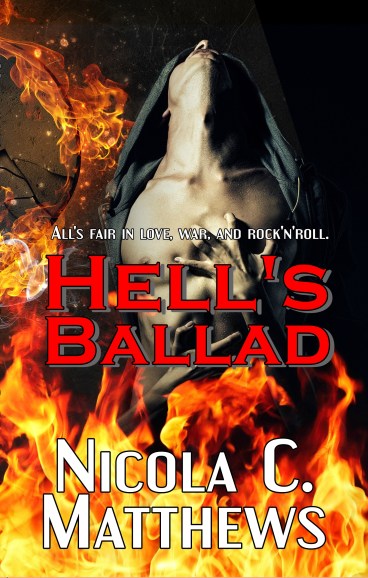
FREE on Amazon – Hell’s Ballad

HB Ebook Mock 1


Hell’s Ballad, a paranormal psychological romantic thriller – is currently FREE on Amazon July 3rd & 4th only. Don’t miss your chance to grab the book readers are calling “a rollercoaster of emotions.”

CLICK HERE to download.