Utterly Useless Writing Rules

When I was in high school and college, I absolutely hated having the English professors telling me that I had to write a certain way, had to follow certain rules.  After spending twenty-eight years writing, I have come to learn that the only rule that a writer has to be concerned with is keeping their readers’ attention…by any means necessary.  Needless to say, I have come across a few rules that I rarely use, even though some of them were the cornerstone of what I was taught for 16 years of English composition classes.  I have decided to share with my readers and budding authors the rules that I have found to be utterly useless when it comes to writing fiction and other types of written entertainment.  These are not all-inclusive, so there very well could be a follow-up blog regarding even more utterly useless writing rules.

1.  Write what you know:  Anyone who has ever written any type of fiction knows that this is one rule that should have never been written down when it comes to the creation of mythical lands, creatures, characters, the really bizarre, and the really hideous.  The whole point behind skill as a writer is to write in such a way as to make the reader think all this is possible, even though they know there is no such things as goblins and werewolves and zombies.  Readers should question the sanity of the writer, wonder how on earth they know so much about murder and crimes (it’s called imagination and research, in case you didn’t already know), but not actually think that the writer is a serial killer.  If one must write only what they know, then it would mean Stephen King had to become a mass murderer, a psychic, and a traveler of time and space to create the fruits of his imagination.  Likewise, Anne Rice not only met Lestat, but somehow managed to follow him around all the decades of his life.  Of course, this didn’t really happen, but the fact that they didn’t know any of this through firsthand knowledge but had the readers so convinced that these people and events really happened is just a testament to their talent with a pen.

2.  Never write in first person perspective:  I don’t know who came up with this rule, but it’s about as useless on some stories as udders on a bull.  Writing in third person is the better choice if you have a lot of characters and want to explore several points of view and emotions of those characters.  However, there are a lot of stories that sound better and are better told from the first person perspective.  For example, romance stories and erotica are almost exclusively written in the first person perspective because it helps to pull the reader in and put them directly into the thick of the story.  If the story is well written, the reader may even feel as if they have been put center-stage in the storyline and are experiencing everything for themselves.  It is a very personal and oftentimes emotional ride for the reader, something that is very hard to pull off when writing in third person.

3.  If it is possible to cut a word out, then cut it:  This goes back to not BSing your way through a story.  This rule holds true to 99% of writers.  However, sometimes BSing is a good thing, if, and only if, you are talented enough to keep your readers interested. Interest is the key phrase to this rule.  The only thing that matters is to keep your readers reading your every word.  If they are skipping through parts of it, then you are failing as a writer.  Cutting unnecessary words may be necessary at times, and at other times it can be a big no-no.  If it helps the flow of the story, or keeps readers interested, then keep it in the storyline.  If it is just fluff that has nothing to do with the storyline, is not intended to break up the monotony of a storyline, or is just not that interesting to read, then cut it from the work.

4.  Pick a writer you really admire and immolate his/her writing style:  I have no idea if professors still adhere to this rule from days gone by, but this is the first rule I tell authors to avoid.  You do not want to be known as the writer who writes like ‘insert-famous-author’s-name-here.’  Fans of that writer will run out to purchase your work, and, when they discover you do not write exactly like their favorite author, they will never read another piece of your writings.  To make matters worse, with the information age, they can have turned a huge chunk of possible readers against you before anyone even gives you chance, thanks to the power of internet, Facebook, Twitter, Myspace, and weblogs.  If you want to be known as a great author, then find your own writing style, your own voice, and be known for being perfectly you.

5.  Everything must be perfect and follow all the writing rules:  Good grammar, well structured sentences, proper spelling and punctuation is extremely important.  However, a writer shouldn’t be afraid to break a rule every now and again.  A fragmented sentence here and there isn’t going to hurt, so long as it appears in the proper place, like when a character is having an inner monologue.  Putting it in an improper place.  Like here.  Makes little sense.  But if I do this just right.  Like add it here – Wait.  What was I doing? Tina thought to herself.  Well, you get the idea.  Some rules can be broken, if done in such a way that it helps the flow of the storyline and does not hinder it.  Other rules, such as proper spelling, subject/verb agreement, and double negatives should be, for the most part, followed to the letter.

 At the end of the day, the -ONLY- thing that matters, the only goal of a writer, is to be read.  You must keep your readers’ attention regardless, so writing rules be damned.  If that means writing fluffy and flowing words or cutting it down to a little bit of nothing or even taking a hundred mile trip around the point to get to that point, then that’s what you do.  Following any type of rule should only be done if it is helping the storyline and if it is going to keep the readers’ attention.  Because even if your work is only a single page long and written perfectly, if readers skip through any part of it, then you have failed as a writer.

8 Signs of Trolling


The signs of a devious little troll out to trash your work are all around you.  Sometimes they are so glaringly obvious that it’s hard to not see them.  Other times the slippery little devils will sneak a trolling comment in without you realizing it.  Whatever type of troll or trolling comment you may get, there are a few signs that will clue you in on whether or not you have been trolled.

1.  incoherent babble or text speak – If it took you longer to decipher what the commenter wrote than it did for you to write the work that the comment appears on, chances are it’s a troll. 

2.  attention whores –  These will be comment after comment after comment from someone who will use every troll trick in the book to illicit a response from the writer or even the fans of the author.

3.  “I know you are but what am I?” – Comments like “You suck!”  “That was stupid!”  “Don’t quit your day job.”  “I hope no one is stupid enough to buy your book.”  It’s a subspecies of attention whore trolls who like to tell the author in no certain terms that the work in question was not any good.  Often times retorting with, “Okay, smart guy, since you are such a better writer than me, let’s see you post/print/publish your work for me to trash talk.  See how you like it.”  Usually the troll in question will start craw fishing like crazy in an attempt to not have to explain that they can’t write and were saying those things because they were actually jealous of all the attention your work is getting.

4.  LOOK AT ME!  LOOK AT ME! – Another subspecies of attention whore trolls seem to think that IF THEY WRITE EVERYTHING IN ALL CAPITAL LETTERS THAT IT MAKES THEM LOOK SMARTER AND THAT IT WILL GET THEIR POINT ACROSS.  THEY ALSO THINK THAT CONSTANT USE OF EXCLAMATION POINTS WILL MAKE THEM SEEM SMARTER AS WELL!!!!!!.  In reality, it really just makes the comments harder to read, usually having the opposite effect that the troll is looking for by causing readers and the writer alike to skip right over the comment (but we’ll keep that our little secret).  Basically it’s the equivalent of a 2-year-old throwing a temper tantrum.

5.  the hypocrite – These are some of my favorite trolls.  I write a lot of erotic fantasy, so the majority of my work gets posted on adult blogs, forums, and websites.  What I find absolutely hilarious is all the ‘morally correct’ people who will go on to these types of sites, break out their bibles and start thumping away in the form of comments meant to belittle the author.  Well I figure since they are already on their high horse, they can take the moral high ground and just not bother to go to sites that contain adult literature.  That way all the little pots won’t have to sit around debating their morality issues with all the little kettles.  Idiots.

6.  the moral high grounder – This is a spin-off of the hypocrite troll.  These are people who will sit and tell the writer, in great detail, exactly why their point of view is wrong and why the commenter is right.  These trolls especially like trolling articles, blogs, and other forms of opinionated writing.  They lay in wait for someone to say something that they do not agree with or do not like just to point out how “wrong” and “bad” the author is for having written such opinions.

7.  I would have written it this way – Okay, newsflash.  Writers do not mind people giving them an honest opinion on what they think would have made the story better, or how they felt about certain events taking place in the plotline, etc.  If it is honest criticism, then we don’t mind.  Don’t expect us to actually change what we have written, but we will keep it in mind for future novels.  But as soon as someone states, “I would have written it this way…” then our ears close up.  We do NOT care how YOU would have written it.  If you really think that you could have written it better, then you can feel free to go spend all the time and energy it took to develop the plotline, develop the characters and the world in which they exist, then write the story, hammer out the details, edit, proofread…There is a lot of work that goes into creating stories.  The funny thing is that of all the trolls who I have openly dared to go write that great idea of theirs since they seem to know so much more than me, not a single one has ever risen to the challenge.

8.  A-trolling I will go – Another sign of a troll is a person who goes around consistently down-rating multiple works by the same author.  Chances are this troll never actually read more than one story/novel/piece by the author in question.  Their reasons for voting down an author’s work usually boil down to some petty reason such as jealousy, boredom, or just because they get some type of sadistic kick out of having such control over an author’s work.  In a lot of cases, giving negative reviews or votes/ratings will cause the work in question to roll down to the bottom of the list of the website it is posted on, plummeting the readership from potential tens of thousands of reads to mere dozens.  Oftentimes trolls know this and enjoy the control they can exert over authors by bombing their work into obscurity.  Usually when confronted and asked why they chose to vote negatively on a story, the only answer they can give is “It sucked.”  This is not a valid reason.  Anyone who reads a story can tell you why they did not like it, be it because the characters were not convincing, the plotline made little sense, there were loose threads in the storyline, etc.  Saying something generic like “It sucked” usually means that the troll in question did not actually read the story and was just going around bombing works for the sheer hell of it or for whatever reason goes on in the tiny brains of mindless trolls. 

Likewise, having the same person vote on multiple stories of the same author is a sure sign of a troll.  After all, any normal person who reads one story by an author and does not like it will not continue to read story after story written by the same author in the hopes of finding something they enjoy, and the fact that they voted them all down or left bad reviews is just more evidence of their trolling ways.  And if the person in question votes negatively or gives bad reviews on multiple chapters of the SAME story, then they might as well stamp TROLL on their foreheads.  No one in their right minds will continue to read chapter after chapter of a storyline that they do not like or that they think “sucks.”  They certainly aren’t going to take the time out to vote negatively on it or give it a bad review.  But if you have someone who is doing this, then congratulations, you just spotted yourself a lovely troll.

These are not, of course, all the signs that you have a troll in your midst.  It’s safe to say that anyone who is not giving an honest opinion but is writing anything that has the sole purpose of infuriating the writer is trolling the work in question.  This does not mean that the person will always have nothing but rosy things to say about the work.  But here is how to spot the difference.

Troll Comment:  “You suck!  This was terrible!  You call yourself a writer?  Better not quit your day job.  I could write a better story in my sleep.  And what the hell is a wereanimal?!  Where’s you rip that piece of garbage from?  I thought that was a clothing line for children.  Are people seriously stupid enough to actually read this crap? (author’s note:  obviously they were since the troll read it!)  I hope no one is stupid enough to buy your book.  What a rip-off!”

The above comment is nothing more than mindless drivel stated by an attention grabbing reader who has nothing better to do with their time than to troll stories with the expressed intent to annoy the writer because he/she is jealous of the author’s writing ability.  Let’s compare it to a comment that actually has some merit.

Non-trolling Comment:  “Okay, this was really badly written and I’ll tell you why.  There were tons of misspelled words, incomplete sentences galore, and I had a really hard time following the storyline.  The dialogue was cheesy at best, and who came up with the names for these characters?  I think it could really be something great if the grammar and spelling was cleaned up a bit and the storyline more coherent.”

Did you spot the difference?  The second comment is certainly not pretty, but it has merit to it.  The commenter isn’t just saying negative things, but is giving reasons on why he/she thinks the way he/she does.  It may be still be criticism, but it’s constructive rather than deconstructive.

Now that you know more about how your trolls think and act, you will stand a better chance of brushing off the comments that have little merit to them.  Just remember, it’s much better if you will simply “not feed the trolls.”

Counting Pages: Does Size Matter?

A recent conversation with a writer friend of mine had me once again wondering how many pages were “too much” or “too little” to consider a written piece of literature a novel?  If asked, most authors will tell you that when it comes to writing a novel, it takes as many words and pages as it takes.  In other words, if it takes 100 pages or 1000 pages, there is no right or wrong.  One author may cut straight to the storyline, stay on track, and write a complete, complicated storyline in a few thousand words.  Other authors could take a similar storyline and take several hundred thousand words to tell the tale.

So, when it comes to size, word count, and page count, there is no “magic number” that automatically turns a short story into a novel.  It is what it is according to the author who wrote it.  However, there are still some general rules of thumb authors need to take into consideration when it comes to novel lengths and writing in general.

First off, there is such a thing as being too short.  Take, for instance, flash fiction.  When it comes to flash fiction, something that only has a few hundred words is -not- a short story and it certainly isn’t a novel.  Flash fiction is just that – a quick idea written in as few words as possible.  A story or novel has to be long enough to be engaging to the reader.  Getting straight to the point and staying on track is one thing;  writing so few words that it resembles a synopsis rather than a story does not a storyline make.

Likewise, you don’t want to drown your readers in an ocean of words.  The storyline has to be interesting and written in such a way that your readers will want to continue reading, but not so long-winded and boring that they want to turn the pages just to get to the ‘interesting’ parts.  I have often read articles by other authors who have stated that every word you write should have something to do with the storyline and help progress that storyline along.  I say that side-trips and BSing your way through a piece if fine – so long as those words are interesting to the readers and keep them riveted to the page.  But if you have written 1000 pages of storyline that has half of it being BS and filler, then your readers are going to be flipping through pages instead of reading them.

On the flipside of boring filler is writing something that has so much going on in the storyline that the reader cannot keep the characters, the events, and the half-a-dozen storylines straight.  Just like you can drown your readers in a sea of useless words that does nothing to help the storyline, you can drown them in a raging ocean of so many literary events that they simply become overwhelmed.  Some may try to plow their way through the storyline, and others may give up altogether and toss the book out with the used magazines.

Novel size is a thin line that moves depending upon the author who is writing.  The one thing that holds true to each author is that their number one job in writing is to keep their readers interested in their written words.  Create something too short, and they may become frustrated with so little information and not bother reading anything else.  Drown them in a sea of useless, boring words and they will skip their way through huge chunks of your work trying to get to the ‘interesting’ parts.  Overwhelm them in an ocean of dense storylines, characters, and events and they just may give up on reading the novel completely.  Size, in itself, does not matter.  What matters, as always, is the quality of the words written upon the page.

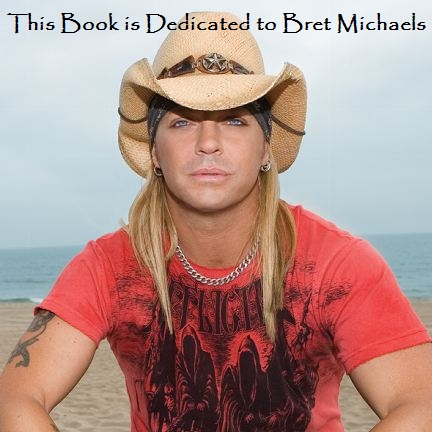
This Book is Dedicated to Bret Michaels…

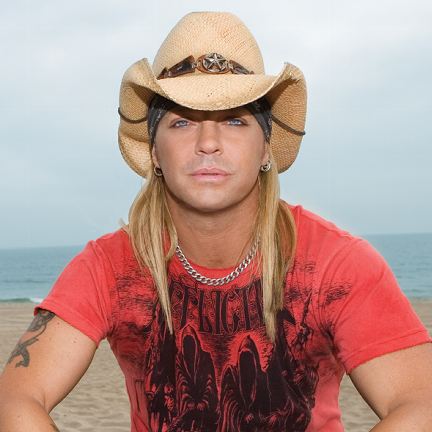
Last year I sat heartbroken and terrified, along with half of the known world, having heard of Bret’s health problems.  I feared for his life, and for mine, for I owe this man my sanity, and in some small way, my life.

I will not harp on the details in this post.  Anyone wanting to get a rough idea of what Bret has done for me and what he means to me need only to surf to the top of this blog and click on the page titled “Why Bret Michaels is My Mentor.”

I held my breath as May 28, 2010 got closer and closer, waiting to hear that the concert that I had tickets to was being cancelled or rescheduled.  I had been through a lot that year; in all honesty I had been through a lot in the past several years.  This new development was just another ordeal in a long line of ups and downs for me.  During that time, I had relied on the sound of Bret’s voice and my ethereal-like bond with him to get me through another rough patch in an endless road of trials and triumphs that was my life.

May 28th rolled around, and I discovered myself on the Gulf Coast of my home state, standing one row back from the stage, feeling as if I was going to jump clean out of my skin.  I honestly kept waiting for someone to come on stage and tell us that Bret had some sort of set back and had been carted off to the hospital once again.  I kept praying silently to whatever Higher Force there may be that Bret would be okay.  And as promised, at 8 pm Bret took center stage to a sold out crowd of 1400 screaming, thankful fans.  I was just another face in the ocean of smiling, loving faces tilted up to see a man who is both mortal and immortal, an icon, a man among mice….and my hero.

It has always been one of my dreams to meet Bret Michaels.  However, I have a confession to make.  I have always had this gnawing suspicion that if I were to ever meet him, something would happen to him.  I know that sounds nuts, but I really, truly fear that if we were to ever come in contact with each other, it would mean something tragic for him.  I guess I have always considered myself a nobody, nothing special, nobody worth meeting or mentioning.  Yes, I think I’m a pretty decent writer, an author, but as a person….well, I guess I still have the same self-worth of the scared twelve-year girl who had it beat into her every single day that she was nothing and would always be nothing.

I suppose that I know that if, by some miracle, I were to ever meet the man who I deem my own personal savior, I would not make any type of impression on him.  Just another fan in an ongoing parade of fans, another face in the crowd, just one more person who is screaming, “I love you, Bret!  I’m your biggest fan!” 

I know that others feel just as strong of an attachment to Bret as I do.  I guess there may even be some people out there who have similar stories as mine.  I guess what depresses me the most, what I simply do not want to happen, is for Bret to never know that there was a small girl out there in the world, a small girl who grew into a woman, whose life he touched in such an astounding way that she stopped her suicide attempts cold turkey because she didn’t want to leave this earth without first shaking his hand.  A little girl, who still to this day, follows his career, is thankful every day that the Higher Force, whatever it may be, placed him in her life. 

I was so excited to learn that Bret will be back at the Hardrock on May 28th of this year as well.  Unfortunately, it is looking like I will not be able to make the concert this year.  I am once again heartbroken and depressed, although when put into context with what was going on this time last year, I’m once again thankful that I will not make the concert due to personal issues rather than Bret’s health.  Still, I can barely stomach the thought that Bret will be a mere 100 miles away from me.  In the context of the cosmos, that’s practically touching distance.  So close, yet so very far away.  The whole thing makes me want to weep in frustration.

I had so hoped to have finished The Red Fang by May and would somehow be able to get the book to Bret.  Yeah, I know, big dreams there.  But last year there were people putting gifts up on the edge of the stage through the whole show.  I figured that I could always do that, and maybe, just maybe, he might someday read the dedication page.  Because even if I were never to meet him in person, I could at least rest in the knowledge that he knows he has a fan who appreciates him so much that she dedicated her latest novel to him.  I guess, to put it simply, I just want Bret to know that I exist, because if Bret Michaels knows my name, even if it is a pseudonym, then that would somehow make me worth something.

In honor of Bret’s continued good health and his upcoming concert on May 28th at the Hardrock Casino in my birth city, I would like to share with my readers the dedication page that will be included in the novel The Red Fang.  This book is not just dedicated to Bret Michaels, rock star, but Bret Michael Sychak the man for just being the wonderful, talented person that he is:

This book is dedicated to Bret Michael Sychak, a.k.a Bret Michaels.  You have been the shining light in my life, my inspiration, my mentor, my hero.  Seeing you tread fearlessly into the spotlight doing not only what you love, but doing so in the face of tremendous odds, has given me the courage to let loose upon this unsuspecting world a barrage of utter crap the likes of which the world has never known before.  I can’t write for shit, but that shouldn’t stop me from doing it, or others from reading it.  Rock on!

Love, Poison, and Bret Michaels always,

Nicola

*Please feel free to link back to this article, Tweet it, post on Facebook, Myspace, etc.  My hopes are that if enough people get the word out about this article, Bret might at least have heard of the erotic fantasy writer known as Nicola Chey Matthews.

Plagiarism Update #3: Victory to the Original Authors!

I am pleased to announce that thanks to the hard work and dedication of Alex Severin, Master Vyle, and numerous other authors who were plagiarized by “Mistress” Ana Phylaxis, all of her stolen works have been taken down from Amazon.  I just hope that this woman understands that just because a story is published online, it is STILL protected under the same copyright as it would be if it had been published in print, and therefore is punishable by law.  Unfortunately, it would appear that this woman has managed to brain-wash a large portion of people who call themselves “fans” of hers and is calling out Alex Severin’s claims that she is the original author of her own work.

Are you serious?  Which is more likely, that 44 people got together and decided to rip off ONE PERSON’S work by picking and choosing stories from her, posting them online (some of the stories have been out in cyberspace for more than a decade) and allowing readers to access them FOR FREE….or that Rebekah Geissler searched the internet for these stories, copied and pasted them into a Word document, slapped them together through LuLu and then SOLD them to the masses.  Hmmm, 44 people looking to not make a single cent off of ‘her’ work or her looking to make a few quick bucks off the hard work of 44 other authors?  Yeah, it doesn’t exactly take a rocket scientist to figure that one out.  And to add insult to injury, she thinks everyone is too stupid (and apparently her ‘fans’ are) to realize that all these different stories have different writing styles and use of the English language.  Yep, that’s not a tell tell sign now, is it?