I Quit – A Hard Look at the Indie Publishing Industry

i-quit2

I’m not famous. I don’t have a hoard of fans waiting in the wings to gobble up every book I produce. I don’t have legions of social media followers who hang on every word I type, every status update I produce. I don’t even have family members who wait with bated breath to find out when my latest book is going to drop, or what new project I might have brewing in the back of my head. I am reminded of just how woefully unsuccessful I am every time I post a cute meme or quirky status update to the sound of crickets chirping and the total lack of “likes,” “shares,” and “favorites” I get.  Each release of a new book and the sales ranking plummeting into the abyss is just another painful reminder of how very, very unsuccessful I am as a writer. The lack of paying customers commissioning me to design their cover art or format their books is another stellar example of how bad I am at marketing not only my books, but my business and my brand.

Every time my mom comes over, I’m sitting at my computer, working on another project, formatting my latest book baby, frantically typing notes for book #15 in a series for which I haven’t even finished writing book #3 yet. And each time she asks me if I’ve made any money off of the many, many years I’ve spent writing and the thousands upon thousands of hours spent at my computer writing, designing, formatting, marketing, and promoting. Each time my reply is always the same – “No, not yet.” And each time she asks me, “Then why do you keep doing this? Are you happy?”

Ten years ago, five years ago, even two years ago I would have answered that question with a very quick “I don’t do this for money, so of course I’m happy.”

But I have a secret. Last year, after signing a contract with a publisher who has since shut their doors, my entire outlook on this endeavor has drastically changed. I’m no longer happy, and not making any money off of the insane amount of time and energy that goes into these projects is becoming harder and harder to bear. When the last glimmer of hope I had died within a few short days of signing my publishing contract and realizing I had been correct all along – that a publisher was going to do little more than slap their name on the inside cover of my book and still leave all the heavy lifting, i.e. all the marketing and promotion of my book to me while taking close to 76% of my royalties – the desire to keep going when I wasn’t getting a single thing in return just wasn’t there anymore.

There is a single truth in the publishing business today, a truth which is a bitter pill to swallow and very difficult for most writers to come to terms with, but a truth nonetheless – an over saturated market and poor quality has led the entire publishing industry to become little more than a dumping ground of everything from Grad A to Grade Z books and shorts. I equate this influx of books and writers to having a giant swimming pool. The problem with inviting everyone into the pool is that everyone will come play in the pool – including those who have no qualms about pooping and peeing in said pool. In other words, while most people will be decent enough to get out of the pool and go use the restroom like civilized, professional people, those who refuse to abide by the rules of “professionalism” ruin it for the rest of us, thus making us all play in the cesspool of urine and feces.

I’ve heard countless authors say the indie-publishing business is a revolution, that Amazon and other publishing platforms have allowed authors who would not normally be picked up by a publisher to have their words shared with the world. It’s a good thing, or so everyone wants to believe. But what happens when everyone is allowed access is the quality suffers greatly. What happens when suddenly anyone with a high school diploma can be a surgeon? Do you want someone operating on you who actually went to med school, or someone who thinks because they watched every single episode of ER three times they know as much about the field as any doctor would? It’s a bit over-the-top, but you get the idea. Everyone has been so focused on whether or not they could do it, they haven’t stopped to think if they should do it. Just because you can rent out a concert hall doesn’t mean you should start selling tickets and sing in front of a sold out crowd when you have never sang before in your life, have never had any formal training other than singing in the shower. It’s just not the same caliber as someone who has spent years studying and honing their craft.

Everyone thinks not having gatekeepers any more is a good thing. While I agree it has given a platform for thousands of writers who have been turned down countless times by trade publishers, it has, at the same time, created a very uneven playing ground. It has done everyone a great injustice, both readers and authors alike, and not for the reasons most authors think. It is less about the quality of the work it kept at bay and more about the quantity of the work it kept at bay. Think about it. No one is making any money off of literature these days. Publishing houses both big and small are shutting their doors. Authors who had made a decent living at this for decades before are now being forced to give up their dreams for one simple economic fact: law of supply and demand. For you see, those publishing companies weren’t necessarily doing much on quality control because, let’s face it, when you have such wonderful gems as Fifty Shades of Grey hitting the bookshelves, it’s painfully obvious some publishers will publish anything they come across if they think it will make them a quick buck. However, what authors fail to realized is those publishers weren’t just keeping a pile of craptacular books off the market, they were keeping a shit-ton of books in general from hitting the market.

Let me repeat that. Publishers were ensuring the few thousand authors who had trade publishing deals kept their jobs by purposely keeping the market from being flooded with hundreds of thousands of books each year. When you control the supply, you control the market. Now that the gatekeepers are no longer in place, the walls have come crumbling down, and what was once a lucrative market for a few thousand choice writers has become a market which has totally bottomed out thanks to an influx of books – again, the simple law of supply and demand. There is now way too much supply and not nearly enough demand for the books that are out there, thereby making an already small piece of pie virtually non-existent.  Yet again, let me repeat what publishers already know – when you control the supply, you control the market.

In addition to keeping the influx of books at bay thereby keeping the few authors who were able to make a living at their career of choice busy at their computers, the bypassing of publishers Amazon has granted has imposed a far greater injustice to the hundreds of thousands of wannabe writers out there besides a lack of monetary compensation for their work. Back in the “good old days,” query letters and sample manuscripts were looked over by trained editors who had decades of experience in their field. Rejection letters were oftentimes accompanied with helpful, although admittedly scathing, pointers on what the author needed to improve in their writing. At the young age of fifteen I began my journey into this bitterly cruel world where editors had no qualms about dashing a young girl’s hopes and dreams of becoming a writer. By the time I finished high school, I had received enough rejection letters to wallpaper my entire bedroom. With those rejection letters came enough dream-crushing “pointers” from editors that it is a thousand wonders I didn’t just give up before I ever got started. So the question remained, exactly why did I keep submitting sample chapters and open myself up to ridicule and openly mean rejection letters from editors who were basically telling me I would never make it as a writer? Because with those rejection letters came the gut-wrenching truth: pointers on how I could better myself as a writer. I received free advice with each one of those rejections, advice on how to improve as a writer, advice on my strengths and weaknesses, advice on how to hone my craft. More importantly, I listened. It’s why I am the caliber of story teller that I have become over the years.

Today, writers rarely hear the honest truth about their abilities to weave a good tale, and it has left them all with the inability to not only conduct themselves in a professional manner, but it has left them with unrealistic expectations of success. Perhaps the greatest injustice of all, however, is without trained editors looking over these manuscripts and pointing out everything which needs to be improved, it has left today’s writer with an unwillingness to accept the cold-hard truth that many, many of them just aren’t good writers. When no one is telling them the honest truth, it has left countless authors at the mercy of ruthless reviewers who are more than willing to openly share their thoughts en masse and publicly through Amazon, GoodReads, and countless blogs on just how much they need to improve their craft.  Needless to say, it has caused more than a bit of heartache for authors who have sabotaged their own careers by handling the situation and bad reviews with less than grace and poise. If you want someone to pat you on the head and tell you how great you are, give your manuscript to your family and friends. If you want to know exactly how good you are and whether or not you have a chance of competing in the industry and find out what you need to improve on, send your manuscript to the big boy publishers. As the old saying goes, sometimes the truth hurts.

This brings me back to the point of my post. My mom keeps asking me why I keep doing this if I’m not happy and I’m not making any money. I can’t tell you how many times I’ve asked this myself. Why do I keep torturing myself writing books no one reads? Up until last year, I did it just because I loved to write. But in recent months, I’ve come to realize that I’m tired. I’m tired of giving my work away, I’m tired of having other authors sabotage the entire industry, their careers as well as mine, by producing sub par books and pricing them so cheap I have no hope of every making any money. I’m tired of giving away my talents and not getting compensated for it.

It stops here. I’m damn good at what I do, I have a wealth of knowledge and a lot of talent, and from here on out I’m going to get paid for it. I’ve given so much of myself, more than I care to admit, but there is only so much I can give before the well runs dry. I don’t know about the rest of the authors out there, but I’m tired of working for free, and I’m not going to do it anymore.

You Don’t Know Me

don't assume


It took me about a nanosecond to realize you aren’t really allowed to have a public opinion when you are in the limelight. Let’s face it, when you air an opinion of any kind, you are bound to piss someone off. When you are famous, semi-famous, pseudofamous, or even infamous, voicing said opinion can cost you a LOT of supporters and fans. It’s just safer to not have a public opinion, even when you are posting under your own private account surrounded by family and friends. Don’t get me wrong, one of the things I love about the World Wide Web is the ability to slip into anonymity. Well, sort of.

I think it’s time everyone stopped long enough to ask themselves who’s really behind that screen name? I find it incredibly ridiculous that so many people are so quick to jump on someone when they really don’t know who it is they are speaking to. Just because I don’t announce to the world that I am a bestselling author or slap it on the covers of my books doesn’t mean it isn’t true. Just because I don’t brag about all the times I’ve had conversations with NYT bestselling authors and all the times they have linked to this blog doesn’t mean it hasn’t happened. Just because I don’t brag about being friends with bona fide rock stars or getting put on the guest lists to their concerts doesn’t mean it isn’t true. Just because I don’t brag about all the conversations I’ve had with other bands and the off-the-record interviews I’ve done with them doesn’t mean it never happened. I don’t feel it is anyone’s business who I am friends with or what those friends do for me, and I do not feel the need to air every single aspect of my professional and public lives on social media. I’m very thankful to all of them, to everyone who helps me, to all those people who have answered my questions and who trust me enough to consider me their friend. But no, I’m not going to brag about it on social media. So in all honesty, no one really has any idea who the fuck I am or the connections I’ve made. So naturally it boggles my mind on exactly why someone would want to run the risk of pissing off someone who could possibly help them?

It is for this reason that I have basically quit the Black Veil Brides fan group. No, not the band. Just because they have a bunch of fans who are incredibly disrespectful to each other doesn’t mean I would punish the band for the way their fans behave. But as far as the fan groups, pages, etc. go, I am DONE. Music isn’t a fad for me. Twenty-five years later I am still supporting Bret Michaels and Poison and all the members of both Poison and BMB and I do it because they mean something to me, and not just the band and the music, but the PEOPLE behind all that, the musicians themselves. I have dedicated books to individual members of BVB, I have dedicated books to the band as a whole, just like I’ve dedicated books to Bret and Pete and given kudos to many, many bands that have influenced me over the past few decades. But at this point I’m so disgusted with the way the BVB fans are acting and jumping on other fans that I am to the point where I’m ready to tell their entire fan group to go fuck themselves. I don’t need this kind of drama in my life. I have enough drama with my books being pirated, being plagiarized, and having other authors sabotage my career to really give a flying fuck what all the thirteen year old goo-goo eyed girls think about an innocent comment I put on the band’s IG photo.

With that said, be very, very careful about who you pick a fight with on social media. I make it a point to go out of my way to help people, spending time I don’t have and money out of my own pocket to help other artists with free promotion, free editing services, free graphic art work, etc. I don’t have to do any of this, but what I’ve learned by being generous is I have met a lot of really great people who have connections. What I get in return is beyond monetary value, because I value the friendships I have made and the real people behind the famous name a lot more than I value what they can do for me. Things can really, really open up for you when you stop being a dick to everyone and stop thinking the entire world revolves around yourself and your own little career. If I acted like everyone else and kept telling people “no” and jumping on everyone who looked at me crossways, I most certainly would not have the friends in the industry that I have today.

Sometimes a Rainbow is Better than a Pot of Gold


Rainbow

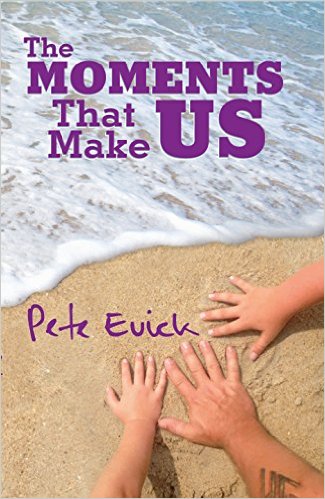
I wanted to share something positive with my readers & fellow authors today, something which has touched me in such a profound way as a writer I think it bears repeating. As I am quickly learning, Pete has become a major inspiration in my life since reading his new book, THE MOMENTS THAT MAKE US. This book has spoken to me on so many different levels, but none so much as Chapter Fourteen.


TMTMU


There is no way I can possibly do this book, Pete, or the message behind the book justice, but if you will indulge me, I’d like to share a few passages from Pete’s book which has spoken the loudest to me. I hate to butcher the book and the message like this, but to understand the point of my post, I feel I must post a few excerpt paragraphs, even though I think the message does not come out as clear as it does when reading the entire chapter, or book, for that matter. I would like to point out this is not the entirety of the paragraphs, just small excerpts that have made the most impact on me.


“…..The music of the era was powerful. I was sold on the energy and the sound. But Poison was different. While they made the trek to Hollywood to make it, they weren’t from the West Coast or some big city. Those guys were from a small town in Pennsylvania – just one state away from Virginia. Maybe that’s why I could relate…..

Cry Tough” had struck such a nerve with me that I begged Todd to let me take the tape home that night. He agreed, and I played that tape over and over again. Suddenly, the second verse came screaming out at me.

Life ain’t no easy ride,
At least that’s what I’m told.
But sometimes a rainbow baby
Is better than a pot of gold.*

 And there it was. The single most defining lyric of my life, to this very day….

“Cry Tough” gave me validation to be poor, to struggle, to not make it. It gave me permission to chase my dreams at all cost…..”


I struggle on a daily basis with being a writer. Mostly, it’s guilt, a feeling of inadequateness with a good, strong dash of jealousy added into the mix. I’ve got to the point where I avoid FB like the plague because it stresses me out to see all the posts by fellow authors of new releases coming out, the author events, the launch parties, etc.

No matter what I’m doing, I always feel guilty when I’m not writing. Never mind I have a full time job, a husband, kids, and a house to tend to. I know I have 900 different things that require my attention any day of the week, I know my regular job requires long hours and lots of stress that I had not bargained for, but I still feel guilty when I’m not writing.

I know there is no way for me to push out a new novel every month or two, and if I did manage it, it would be utter crap and I wouldn’t be able to bring myself to put my name on it because I’m such a bleeding heart artist I refuse to put out anything I’m not 100% sure is the absolute best work -I- can produce.

Mentally I KNOW these things, know I’m doing good to get a single book out each year, but I still can’t help but feel I should be doing more. I’m probably harder on myself than anyone else could ever be, know there is really no reason for me to feel guilty about the lack of time I have to write when I have so many other things I can’t put off which require my immediate attention, but yet here I sit, reminding myself I have 2 unfinished novels I need to be writing even though I have 2 closets that need to be cleaned out before school starts in a few days. Even though I know in the back of my mind that my department would probably crash and burn if I were ever to resign from my position, I still can’t help but look at my complete lack of success at both my regular job and my writing career and feel like I am a complete failure.

What, exactly, have I accomplished in the last twenty-two years of my life?

A few weeks ago I bought Pete’s book and read it during my lunch hours while at work. I’ve laughed, I’ve been brought to tears, I even saw red and wanted to psycho-momma on a certain unnamed teacher. But Chapter 14, aptly titled “Sometimes a Rainbow is Better than a Pot of Gold,” was the wake-up call I truly needed as a writer.

I know most of us writers push ourselves too hard. We try to keep up with everyone else, strive to make a name for ourselves and are out there doing all this on our own. We have chosen to go indie despite the massive amount of time involved, the over-saturation of the market, and the all-consuming work which never seems to end. We are so busy trying to obtain some far-off goal where we can finally say “I made it as a writer!” we forget —sometimes a rainbow is better than a pot of gold.—

I want everyone to sit and really think about that for a second. For me, the pot of gold would be a massive contract with a large advancement where I could quit my job and write full time and become a major bestseller, or better yet, the ultimate goal would be a multi-million dollar movie deal. But I also know getting that type of deal would come with deadlines, huge responsibilities, and more pressure than what I am currently under.

Right now, I AM living in my rainbow. I have a great job, granted some days I loathe it and want to smack half the company, and I am certainly underpaid for the amount of work and total crap I have to deal with, but all-in-all, I can’t complain. When I have fellow coworkers and managers tell me quietly how much my VP thinks of everything I accomplish at my job, I know I am needed, even if I’m not really appreciated. It’s not exactly glamorous but I’m good at it, and I’m also lucky to have it.

I often say I have the best of both worlds. I have a job which keeps a roof over our heads, with time spent away NOT thinking about books, and I also have this wonderful passion for creating stories which I am able to share with people thanks to Amazon and social media. But I think the simple fact sometimes a rainbow is better than a pot of gold gets lost on all of us. We are so busy chasing our dreams we forget to stop and appreciate what we have already accomplished. I’m not saying I wouldn’t jump at the chance to write full time, or work on a movie project, or any number of other projects, but I also am very proud of the seven books I’ve managed to publish in the past four years. It’s not exactly the dream career I wanted for myself, but it certainly is no small feat.

I guess what I’m trying to say is, take the time to appreciate the small things you have accomplished. Live inside your rainbow and be happy to have it. Don’t ever stop chasing your dreams, but don’t forget to savor the ride. I never set out to be Anne Rice, and I think it’s time I stopped comparing my success to the success of others.

I have always looked to Bret as my mentor, for giving me the drive to keep writing and chasing my dreams no matter what life has thrown at me. In the past year, I have become an avid Black Veil Brides fan who both admires the hard work and dedication they have to their music and their fans, as well as strive to remember they didn’t just have all of their good fortune handed to them. They worked hard to get it, and so I must too.

Today, I came across another man who has also worked hard to earn what he has accomplished, and I am happy to add Pete Evick to my short list of mentors. Today, I am not just striving to keep chasing my dreams like Bret, but I am also striving to be more like Pete, and learn to be happy and appreciative of the rainbow I have, because right now my rainbow IS better than a pot of gold.

So thank you, Pete, for being a totally awesome guy, and for sharing your words of wisdom and self-discovery with your fans. I can’t say enough about how wonderful and inspiring this book has been to me. And if I’ve went so far off base on the message your words were trying to convey, please forgive me!


*Cry Tough – words and music by Bret Michaels, Bobby Dall, Bruce Johannesson, and Rikki Rockett. All copyrights to their original creators where applicable.

Interview: Nicholas Tanek

Today I had the pleasure of interviewing Nicholas Tanek, author of The Coolest Way to Kill Yourself.

Tell us a little about yourself – your education, family, etc.

Nicholas Tanek: I am the author of The Coolest Way to Kill Yourself and Chipped Black Nail Polish. I was a punk rock skater kid from New Jersey who got swept away in the New York City rave scene in the 90’s. Although I was doing tons of drugs, I graduated from Rutgers University with a degree in English. Basically, I was a middle class white kid who grew up in Edison and New Brunswick, NJ. I love to write. I love being involved with anything dealing with the creative arts. This includes writing, music, comedy, and art.


What started you on your journey to become an author? 

Nicholas Tanek: The love of my life died in 2012. Her name was Lynn and she was 37 years old. We both loved being creative and we loved to write. All this time, I would write poems and stories about and for women. I would get published but she would not. She was very upset about this. She would always say, “No one is ever going to write anything for or about me.” So, I wrote a book for the woman who thought that no one would write a book for her.  Hurricane Sandy hit New Jersey and I only had a generator. So, I used that to power my laptop. I wrote this tribute for her. At the same time, it became a memoir. It was also very therapeutic for me. In turns, it became therapeutic for the readers too. The book is titled The Coolest Way to Kill Yourself. After that, I wrote a prequel titled Chipped Black Nail Polish, which is a coming of age story about my first love. It takes place in the 1989 New Jersey/New York punk rock scene. The positive reaction to The Coolest Way to Kill Yourself inspired me to write Chipped Black Nail Polish. Now, I have been inspired to write my next book.


What is a usual writing day like for you? 

Nicholas Tanek: I usually write during the evenings. I like to be emotionally honest and keep the writing style rooted in whatever emotion I am feeling. I need music. Every part of the book has a song that goes with it. So, I play it while I write the scene. Then, we edit, edit edit. After that, we edit more.


Do you have a specific writing style? Are you a plotter or a panster when it comes to writing?

Nicholas Tanek: I definitely start with a loose outline in my mind. The main aspect is me getting the words onto page. Because all of the stories are true, I know the beginning, middle, and the end. First, I have to get it out of my head and onto the page. Second, I have to make sure the structure works and there is a flow to the work. Finally, the editing makes it all come together.


How much of your work is based on first-hand knowledge? Is anything you write based on real people/events and if so, how did they inspire you to create your work?  

Nicholas Tanek: My books are all true. I just change the names and label them fiction for legal reasons.


Do you get writers’ block and if so, how do you overcome it? 

Nicholas Tanek: I look at it this way. I only work when I feel inspired. If I am not inspired, I do not want to put out anything. I absolutely love writing, but I only want to write something that I feel inspired about. So, I will go through a period of time when I am not writing, but that means that I am helping other creative people with their creative work. Creativity inspires creativity. So, in my opinion, surrounding yourself with creative people is a wonderful way to overcome writer’s block.


Who are your main influences in the writing world? Do you have favorite authors? 

Nicholas Tanek: I like Anais Nin, Hunter S. Thompson, Herman Hesse, Richard Shannon, and many more. I also like comedians who write. Patton Oswalt, David Cross, Chris Gethard, and Julie Klausner are very funny authors. I think Tom Scharpling should write a book.


Are you trade or indie published? How has your experiences differed from your expectations prior to becoming a published author?  

Nicholas Tanek: I come from the DIY punk rock mentality. I want total control of my work. I am not in it for money. I write books to create art and because I have a need to be creative. So, I am an indie author. With that being said, I welcome talks with publishing companies, but I would want creative control.


Do you have any regrets as an author? 

Nicholas Tanek: In The Coolest Way to Kill Yourself, there was a memory that I wish I included. I was on ecstasy at a rave in Queens during the 1990’s. The fire department shut it down. The Evolution Vibe Tribe asked for one more record to be played. Even though the whole night was electronic dance music, the DJ played “Rapper’s Delight” by The Sugarhill Gang. The crowd went wild and danced their asses off because they knew it was the last dance. I wish I included that in my book.


What is the hardest part about being a writer?

Nicholas Tanek: I do not want to hurt anyone with my writing. At the same time, I write from real experiences. So, there are people who I love who may get hurt if I write about them. That breaks my heart. Still, I have an overwhelming need to be honest with myself and true to the story. So, dealing with that is the hardest part of being a writer.


How long on average does it take for you to complete a book, from the first time you sit down to write until it becomes a published book?

Nicholas Tanek: The first book took more than a year to write and edit, but it took a lifetime to live the story.


Do you have any advice for aspiring writers? 

Nicholas Tanek: Write. Be original. Just write… even if 99% of it is garbage, that 1% may be good. One sentence can change everything. The key is to actually write that one sentence. And, for the love of everything cool, be original.  There are too many people just trying to write to make what they think will sell. Be original. Write for yourself and from the heart.


What are you currently working on?

Nicholas Tanek: My new book is a sequel to The Coolest Way to Kill Yourself.  It is a tribute to the wonderful, wild, and weird people of the New Jersey / New York BDSM fetish community. It is about how people deal with loss and emotional pain through sex. When Lynn died, I was devastated. So, I used the BDSM fetish community as a way to distract myself and ultimately, heal myself. Although it is a very sexual book, it is not masturbation material. The book is a celebration of kink, but mainly, a celebration of friendship. It is very emotional. Hopefully, it may help very sexual people who are going through an emotionally tough time. The working title is Your Kinky Friends.


Follow Nicholas on the web:

Facebook:  https://www.facebook.com/nicholas.tanek

Website:  http://thecoolestway.net

Twitter: @NicholasTanek

Author Interview: David Alan Morrison

DAMpix


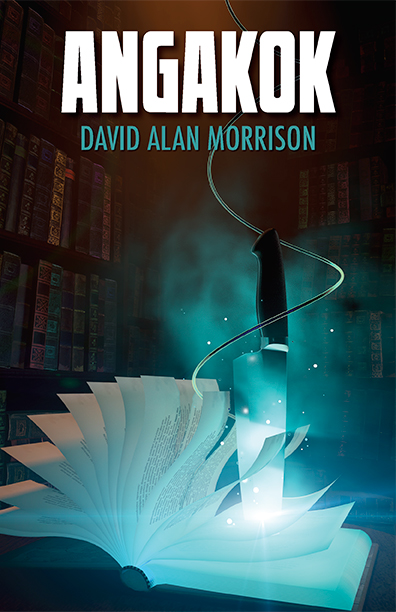
Today I had the pleasure of interviewing David Alan Morrison, author of Guild of Immortal Women.

David received his B.A. in Deafness, Theatre, and Cultural Diversity and his M.A. in Theatre Arts. His plays have been produced in Louisville, Seattle, Lexington and Houston. His middle-grade fantasy, RESCUING AWEN has been adapted to a graphic novel, his memoir TRAVELS WITH PENNY; OR, TRUE TRAVEL TALES OF A GAY GUY AND HIS MOM has been nominated for LGBT awards and GUILD OF IMMORTAL WOMEN was an Indebook finalist. All are available from Amazon.


ang_cover_comp2


Tell us a little about yourself – your education, family, etc.

I had the kind of upbringing that makes a very boring bio-pic;  middle class family living in the suburbs of Chicago, family dog, neighborhood schools.  My dad was a truck driver and my mother worked for the phone company.  My dad’s family was from the deep south, causing a wonderful juxtaposition with my mom’s New England family.  Luckily, they were all kind of crazy and dysfunctional. It’s the most interesting character study a writer could ask for.


 What started you on your journey to become an author?

I can’t remember a time I didn’t write.  As a kid, I would watch unhealthy amounts of TV and, when I didn’t like the show, would re-write the endings.  It evolved into making me the kind of writer who spread scraps of paper around my room (and later my apartments) with fragments of ideas, plot points and quotes.


 What is a usual writing day like for you?

I wake up, drink much too much coffee, procrastinate by cleaning my house, washing dishes and talking to myself.  Luckily, this kind of mindless busy work helps my mind free itself to the point that – about 7 pm or so – I have written whole scenes in my head.  I then head to the computer and hash out several pages of material in a frantic flurry before heading to bed.  It’s not the most effective way to write, but it works for me.


 Do you have a specific writing style? Are you a plotter or a panster when it comes to writing?

I have spent much of my writing life flying by the seat of my pants.  I’ll envision a scene and write it, then repeat this process until I have lots of ideas to work with.  Only then do I back up and begin pulling the pieces together by writing a plotline.  It has its own set of problems, such as discovering plot holes that you could drive a truck through.  My latest work I’m trying to reverse that process and layout the plot first.  So far, it’s maddeningly slow, but much more useful.


How much of your work is based on first-hand knowledge? Is anything you write based on real people/events and if so, how did they inspire you to create your work?

Much of what I write about has some link to real life: a quote I overheard, or a scenario I’ve experienced.  If it’s not a direct link, I do base a lot of my dialogue and action sequences on some real life events. It provides an authenticity to the work.


 Do you get writers’ block and if so, how do you overcome it?

I get writer’s block all the time.  If I’m blocked on a current project, I force myself to sit at the computer and write something: emails, letters, thank-you notes…anything that makes me get words on paper.  The more drudgery sort of work the better, as after a short time, my brain can’t handle the monotony and it starts being creative.


 Who are your main influences in the writing world? Do you have favorite authors?

I love the early Stephen King work.  I idolize Janet Evanovich – she’s a genius.  I thoroughly enjoy reading new authors – the Stephen King of tomorrow is out there.


Are you trade or indie published? How has your experiences differed from your expectations prior to becoming a published author?

I’m indie published.  This had a dramatic effect on my self-esteem, as I thought nobody’s a “real writer” unless they were published by Random House (or some other publisher).  As time went on, I realized this is not true.  The Indie publishing market has opened up a whole new world.  The work is harder when you’re doing your own PR, but the rewards are great. Plus, good writing is good writing. It doesn’t matter how it gets out into the world.


 Do you have any regrets as an author?

I wish I had been more fearless at a younger age.  I wish I could have been less self-conscious.


What is the hardest part about being a writer?

The loneliness.  I enjoy going out, meeting people and doing social things.  A writer’s life requires solitude. I’m still balancing solitude and loneliness.


How long on average does it take for you to complete a book, from the first time you sit down to write until it becomes a published book?

The time frame varies so much this question is impossible to answer.  My advice to new authors is this: finish the book! There is plenty of time to edit and change later.  Just. Finish. The. Story. Figure it will take about the same amount of time to do your edit, then another ¼ of the time to fret about if the work is worth it.  You can cut down this time by ceasing the fretting.  It’s worth it.


Do you have any advice for aspiring writers?

Write. Read. Be honest with self-critiques, for it takes a lot of manure to yield a rose.  Don’t pay attention to people who don’t “get you” or “understand you”. Be true to the material.  Kill some of your favorite scenes – they mean a lot to you, but probably bores the reader to tears.


GOIW10


Below is an excerpt from David’s current WIP:


He glanced to the clock again. 2:36 AM. Maybe he should pop a couple of the Quaaludes Kevin had given him. But as much as he craved sleep, a small part of him feared slumber, for recently, during the few hours his body did shut down, horrible dreams haunted him, dreams in which a red-haired woman stalked him from the shadows.

All his life, he had enjoyed vibrant, joyful, colorful dreams that stayed with him long after he awoke. But nowadays, he awoke from catnaps shaking, covered in sweat, and infused with a deep sense of fear. For all the meditation, journaling and therapy, he could remember only portions of the dream; a violent, angry woman dressed in bright red with a name that sounded noble, like Veronica, Vivica…something with a “V.”  His brain allowed previews of the picture, but never the entire film.

Ever since the accident, his relationship with Jake had deteriorated, his sleep patterns had been destroyed and the only steady commitment he could fulfill was the volunteer position at the animal shelter.  It was as if his whole world had been overturned like a giant Etch-A-Sketch. But through it all, good ol’ what’s-her-name in the red dress had seared a place for herself in his nighttime jaunts. And he knew that in his dreams, she was killing people.

Dane knew he should tell Jake that these vivid dreams had started again, but he didn’t want to concern him. Admit it, he said to himself, you don’t want Jake to think you’ve totally lost it. You’re afraid he’ll think less of you.

But there was also another reason he couldn’t tell Jake about the dreams. He harbored a feeling that was impossible to describe, an inner sense that through the dreams, he was fighting some kind of battle…a battle that was his and his alone. It’s personal.


Check out David Alan Morrison on the web:

Website:  www.davidalanmorrison.com

Facebook:  https://www.facebook.com/DAMauthor/?fref=ts

Twitter: @davidalanmorris